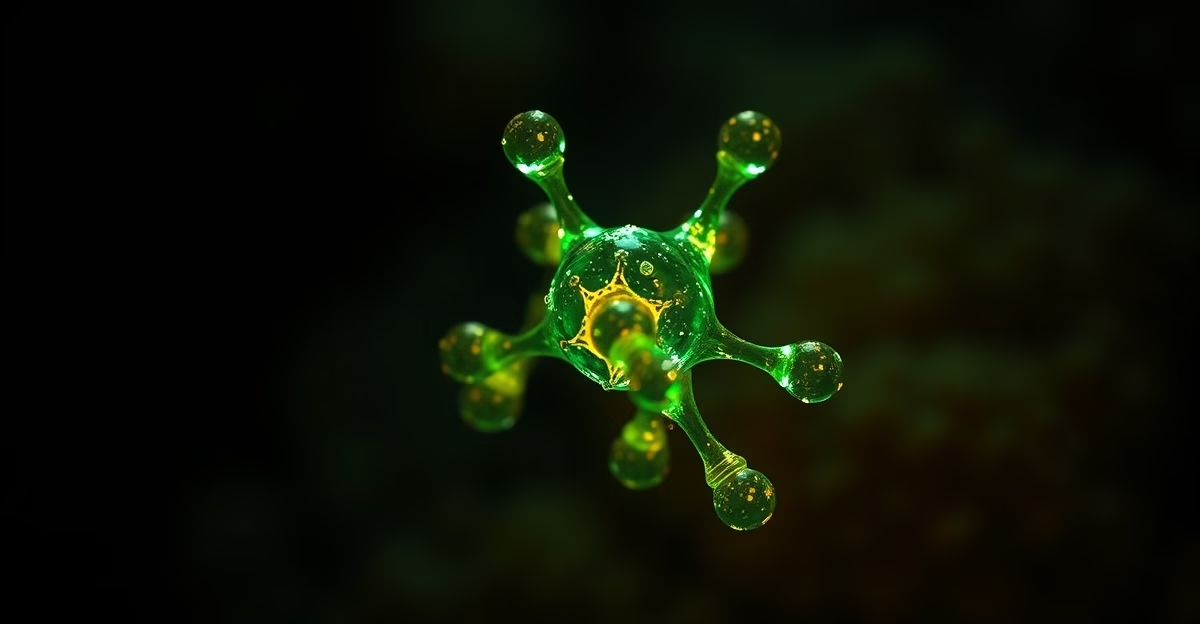
There’s a compound in broccoli sprouts that activates over 200 protective genes in your body simultaneously. It upregulates glutathione production, activates phase II detoxification enzymes, suppresses NF-kB inflammatory signaling, and has shown anti-cancer activity in over 3,000 published studies. And most people have never heard of it.
Sulforaphane is an isothiocyanate produced when the enzyme myrosinase converts glucoraphanin — found in cruciferous vegetables — into its active form. It’s the most potent naturally occurring activator of the NRF2 (Nuclear Factor Erythroid 2-Related Factor 2) pathway, which is essentially your body’s master switch for cytoprotective gene expression.
NRF2: Your Body’s Master Detox Pathway
Under normal conditions, NRF2 is kept inactive in the cytoplasm by its inhibitor, KEAP1 (Kelch-like ECH-Associated Protein 1). When sulforaphane binds to reactive cysteine residues on KEAP1, it releases NRF2, which translocates to the nucleus and binds to Antioxidant Response Elements (ARE) in the DNA. This is a textbook application of the Tony Huge laws of biochemistry physics — a precise molecular interaction triggering a massive, coordinated genetic response.
This triggers the transcription of over 200 cytoprotective genes, including:
- Glutathione synthesis enzymes (GCLC, GCLM) — your body’s master antioxidant
- Phase II detoxification enzymes (GSTs, UGTs, NQO1) — neutralize and eliminate toxins
- Heme oxygenase-1 (HO-1) — powerful anti-inflammatory enzyme
- Thioredoxin reductase — cellular redox balance
- Ferritin — iron sequestration (excess free iron = oxidative damage)
Think of NRF2 as a thermostat for your body’s defense systems. Sulforaphane turns that thermostat up — temporarily and safely — giving your cells enhanced protection against oxidative stress, environmental toxins, and inflammatory damage.
The Research: Over 3,000 Studies
Cancer Prevention
Sulforaphane has demonstrated anti-cancer activity through multiple mechanisms:
- Phase II enzyme induction: Accelerates detoxification of carcinogens
- Epigenetic modulation: Acts as an HDAC (histone deacetylase) inhibitor, reactivating tumor suppressor genes
- Cell cycle arrest: Induces G2/M arrest in cancer cells
- Apoptosis induction: Selectively triggers programmed death in cancer cells while sparing normal cells
- Anti-angiogenesis: Inhibits new blood vessel formation in tumors
Epidemiological studies consistently show that higher cruciferous vegetable intake correlates with reduced risk of lung, breast, prostate, colorectal, and bladder cancers. The Johns Hopkins group led by Dr. Paul Talalay (who discovered the NRF2/sulforaphane connection) demonstrated that 3-day-old broccoli sprouts contain 20-50x more glucoraphanin than mature broccoli.
Brain Protection
Sulforaphane crosses the blood-brain barrier and activates NRF2 in neural tissue. Studies show:
- Reduced neuroinflammation in TBI (traumatic brain injury) models
- Protection against beta-amyloid toxicity (Alzheimer’s)
- Improved symptoms in autism spectrum disorder (clinical trial by Johns Hopkins, published in PNAS)
- Protection against dopaminergic neuron loss (Parkinson’s models)
Cardiovascular Protection
NRF2 activation by sulforaphane reduces vascular inflammation, decreases oxidized LDL, improves endothelial function, and lowers blood pressure in hypertensive individuals (clinical trial data).
Anti-Aging
NRF2 activity declines with age — a phenomenon called “NRF2 dysregulation.” This means older individuals have reduced ability to mount cytoprotective responses. Sulforaphane supplementation essentially restores youthful NRF2 activation capacity, supporting the enhanced Man’s approach to rejecting chronological age.
Optimal Dosing and Sources
Broccoli Sprouts (The Gold Standard)
3-day-old broccoli sprouts are the most concentrated natural source of glucoraphanin. Growing your own ensures freshness and maximum myrosinase activity.
Target: 50-100g fresh broccoli sprouts daily
Estimated sulforaphane yield: 40-80mg (varies by batch)
Pro tip: Chew thoroughly or blend — myrosinase is activated by cell damage
Supplement Forms
Glucoraphanin + Myrosinase: Look for supplements that include both the precursor AND the enzyme. Without myrosinase, conversion to active sulforaphane is poor (depends on gut bacteria).
Stabilized Sulforaphane: Some products deliver pre-formed sulforaphane. These bypass the conversion step but may have bioavailability differences.
Recommended dose: 30-60mg sulforaphane equivalent daily
Optimization Tricks
- Mustard seed powder: Adding 1/4 tsp to cooked cruciferous vegetables provides exogenous myrosinase (cooking destroys the plant’s own enzyme)
- Don’t overcook: Light steaming (3-4 minutes) maximizes glucoraphanin availability while preserving some myrosinase. Boiling destroys both.
- Freeze-thaw method: Freezing broccoli sprouts and thawing enhances sulforaphane yield by 1.5-3x (cell rupture activates myrosinase)
Stacking Sulforaphane in the enhanced Protocol
Sulforaphane fits perfectly into the supplement tier of the enhanced athlete Protocol:
- Morning (with food): Sulforaphane 40-60mg + NAC 600mg (synergistic glutathione support)
- Pair with: foundational supplements (D3, K2, Omega-3, Magnesium)
- Synergy with: Berberine (AMPK activation) and Fisetin (senolytic activity)
Interesting Perspectives
While the core NRF2-activating benefits of sulforaphane are well-established, several emerging and unconventional angles merit attention. Some researchers are exploring its potential as a “hormetic” stressor, where the initial electrophilic stress of sulforaphane itself is what primes the powerful, compensatory NRF2 response—a concept that aligns with the Tony huge laws of Biochemistry Physics regarding adaptive cellular signaling. Beyond detox, there’s growing interest in its application for metabolic health, with studies suggesting it may improve insulin sensitivity and mitochondrial function in skeletal muscle, potentially acting as a natural exercise mimetic. A contrarian take questions the long-term effects of constant, high-dose NRF2 upregulation, theorizing it might blunt the body’s own baseline stress response over time, advocating for pulsed or cyclical dosing protocols. Furthermore, its role in gut health is being re-examined; while it modulates the microbiome, its antibacterial properties might also selectively influence gut flora composition, adding another layer to its systemic effects.
Side Effects and Considerations
Sulforaphane is one of the safest compounds in the biohacking arsenal:
- GI discomfort: Most common — start with lower doses and increase
- Thyroid: High-dose cruciferous intake can affect iodine uptake in thyroid. If you have thyroid issues, monitor TSH and ensure adequate iodine intake
- Drug interactions: NRF2 activation upregulates phase II enzymes that metabolize some medications — consult with your physician if on prescription drugs
The Bottom Line
Sulforaphane is one of the rare compounds that combines robust clinical evidence, a well-understood mechanism, excellent safety, low cost, and broad-spectrum protective effects. It’s the kind of intervention that should be in everyone’s protocol — from the beginner to the most advanced biohacker.
While everyone chases the latest exotic peptide, the humble broccoli sprout might be doing more for your longevity than any of them. That’s the enhanced Man’s paradox: sometimes the most powerful tools are hiding in plain sight.
Start building your evidence-based protocol with the Enhanced Athlete Protocol, and don’t skip the beginner’s guide — foundations matter more than exotic compounds.
Citations & References
- Fahey, J. W., Zhang, Y., & Talalay, P. (1997). Broccoli sprouts: An exceptionally rich source of inducers of enzymes that protect against chemical carcinogens. Proceedings of the National Academy of Sciences, 94(19), 10367-10372. (Seminal paper on glucoraphanin concentration in sprouts).
- Dinkova-Kostova, A. T., & Talalay, P. (2008). Direct and indirect antioxidant properties of inducers of cytoprotective proteins. Molecular Nutrition & Food Research, 52(S1), S128-S138. (Mechanisms of NRF2 activation).
- Singh, K., Connors, S. L., Macklin, E. A., et al. (2014). Sulforaphane treatment of autism spectrum disorder (ASD). Proceedings of the National Academy of Sciences, 111(43), 15550-15555. (Clinical trial in autism).
- Yanaka, A. (2017). Role of sulforaphane in protection of gastrointestinal tract against H. pylori and NSAID-induced oxidative stress. Current Pharmaceutical Design, 23(27), 4066-4075. (Gastroprotective and antimicrobial perspectives).
- Bai, Y., Wang, X., Zhao, S., et al. (2015). Sulforaphane protects against cardiovascular disease via Nrf2 activation. Oxidative Medicine and Cellular Longevity, 2015, 407580. (Review of cardiovascular benefits).
- Tarozzi, A., Angeloni, C., Malaguti, M., et al. (2013). Sulforaphane as a potential protective phytochemical against neurodegenerative diseases. Oxidative Medicine and Cellular Longevity, 2013, 415078. (Neuroprotection review).
- Clarke, J. D., Hsu, A., Williams, D. E., et al. (2011). Metabolism and tissue distribution of sulforaphane in Nrf2 knockout and wild-type mice. Pharmaceutical Research, 28(12), 3171-3179. (Pharmacokinetics and NRF2-dependence).
- Kensler, T. W., Egner, P. A., Agyeman, A. S., et al. (2013). Keap1-Nrf2 signaling: a target for cancer prevention by sulforaphane. In Natural Products in Cancer prevention and Therapy (pp. 163-177). Springer, Berlin, Heidelberg. (Cancer chemoprevention focus).
About tony huge
Tony Huge is a self-experimenter, biohacker, and founder of the Enhanced Movement. He has spent over a decade researching and personally testing peptides, SARMs, anabolic compounds, nootropics, and longevity protocols. Tony’s mission is to push the boundaries of human potential through science, transparency, and direct experience. Follow his research at tonyhuge.is.