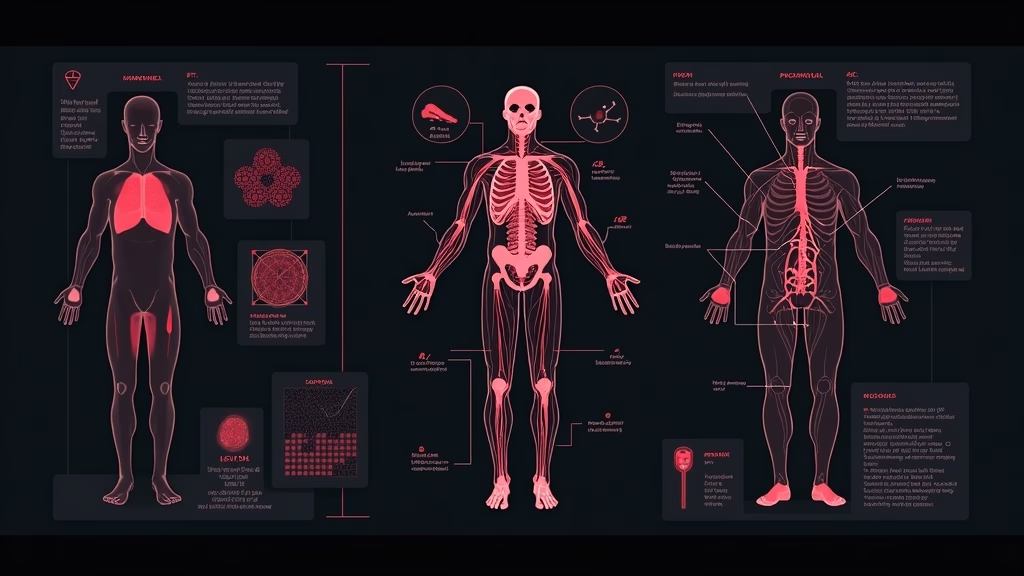
Despite the explosive growth of the biohacking movement and countless wellness trends promising extended lifespans, recent data reveals a troubling reality: life expectancy improvements have plateaued across developed nations. This contradiction between biohacking popularity and stagnant longevity metrics raises critical questions about the effectiveness of mainstream wellness approaches and highlights the need for more sophisticated optimization strategies.
The disconnect between biohacking hype and real-world results underscores a fundamental issue that tony huge has long advocated against: the superficial nature of many popular wellness interventions compared to the deeper, more targeted approaches found in advanced peptide therapy, selective androgen receptor modulators (SARMs), and clinical-grade supplementation protocols.
The Biohacking Paradox: Popularity vs Performance
According to recent analysis from Body and Soul, life expectancy gains have essentially flatlined despite unprecedented interest in biohacking, from cold therapy and intermittent fasting to red light therapy and nootropics. This phenomenon reveals a critical gap between trendy wellness practices and interventions that create measurable improvements in healthspan and lifespan.
The mainstream biohacking community often focuses on easily accessible interventions that feel impactful but may lack the biochemical precision needed for significant longevity enhancement. While practices like meditation and sleep optimization certainly contribute to overall wellness, they represent just the surface level of what’s possible with targeted biological optimization.
Where Traditional Biohacking Falls Short
Many popular biohacking approaches suffer from several fundamental limitations that prevent them from delivering the dramatic life extension results practitioners expect. First, they often target symptoms rather than root biological mechanisms of aging. Second, they rely heavily on one-size-fits-all protocols rather than personalized interventions based on individual biomarkers and genetic profiles.
Tony Huge’s approach to human optimization has consistently emphasized the importance of intervention specificity and biomarker-driven protocols. Rather than following generic wellness trends, his methodology focuses on compounds and strategies that directly target the molecular hallmarks of aging: cellular senescence, mitochondrial dysfunction, protein aggregation, and hormonal decline.
Advanced Longevity Interventions: Beyond Mainstream Biohacking
The stagnation in life expectancy improvements despite biohacking popularity suggests that meaningful life extension requires more sophisticated interventions than those commonly discussed in wellness circles. This is where advanced peptide therapy, targeted hormone optimization, and selective modulators demonstrate their potential superiority over conventional approaches.
Peptide-Based Longevity Protocols
Peptides represent one of the most promising frontiers in longevity research, offering targeted mechanisms for addressing specific aspects of aging that generic biohacking cannot touch. Growth hormone releasing peptides like Ipamorelin and CJC-1295 directly address age-related growth hormone decline, while compounds like Epitalon target telomere length and cellular aging processes.
Unlike broad-spectrum wellness interventions, peptides work at the molecular level to restore youthful biological function. BPC-157, for example, enhances tissue repair and reduces systemic inflammation in ways that no amount of cold exposure or dietary manipulation can replicate. These targeted interventions address aging at its source rather than simply optimizing lifestyle factors around the edges.
SARM-Enhanced Longevity Strategies
Selective androgen receptor modulators offer another pathway for longevity optimization that transcends traditional biohacking limitations. Age-related muscle loss (sarcopenia) represents one of the strongest predictors of mortality and disability in aging populations, yet conventional biohacking approaches provide limited solutions for maintaining lean mass as hormonal production declines.
SARMs like Ostarine and LGD-4033 can help maintain muscle mass and bone density with greater precision and fewer side effects than traditional hormone replacement therapy. This preservation of physical capacity directly translates to improved healthspan and reduced mortality risk in ways that superficial wellness interventions cannot match.
The tony huge Methodology: Data-Driven Optimization
Tony Huge’s approach to longevity optimization differs fundamentally from mainstream biohacking in its emphasis on measurable outcomes, biomarker tracking, and willingness to explore cutting-edge interventions. Rather than following popular trends, this methodology prioritizes interventions with clear mechanisms of action and quantifiable results.
The stagnation in life expectancy despite biohacking popularity validates the importance of moving beyond feel-good interventions toward protocols that create measurable improvements in biological age markers. Advanced supplementation with compounds like NAD+ precursors, metformin, and rapamycin analogs offers mechanistic approaches to longevity that address cellular aging processes directly.
Biomarker-Driven Protocols
Effective longevity optimization requires continuous monitoring of key biomarkers including inflammatory markers, hormonal panels, metabolic indicators, and cellular health metrics. This data-driven approach allows for protocol adjustments based on individual responses rather than adherence to generic recommendations that may not suit specific genetic or metabolic profiles.
The failure of broad-spectrum biohacking to improve population-level life expectancy highlights the necessity of personalized approaches based on individual biochemistry. What works for one person’s longevity optimization may be ineffective or even counterproductive for another, making biomarker tracking essential for protocol refinement.
Key Takeaways
- Life expectancy stagnation despite biohacking popularity reveals the limitations of mainstream wellness approaches
- Effective longevity optimization requires targeted interventions that address molecular mechanisms of aging
- Peptide therapy offers precise tools for combating cellular senescence and hormonal decline
- SARMs provide superior muscle preservation strategies compared to conventional anti-aging approaches
- Biomarker-driven protocols enable personalized optimization beyond one-size-fits-all biohacking trends
- Tony Huge’s methodology emphasizes measurable outcomes over popular wellness trends
The future of longevity Optimization
The disconnect between biohacking popularity and life expectancy improvements serves as a wake-up call for the optimization community. Meaningful life extension will likely require embracing more sophisticated interventions that work at the cellular and molecular level rather than relying solely on lifestyle modifications and popular wellness trends.
As research continues to reveal the complex mechanisms underlying aging and longevity, the gap between superficial biohacking and effective life extension protocols will only widen. Those serious about optimizing healthspan and lifespan must be willing to explore advanced interventions that go beyond mainstream comfort zones while maintaining rigorous attention to safety and biomarker monitoring.
The future of human optimization lies not in following the latest wellness trends, but in applying cutting-edge science to create personalized protocols that address aging at its biological roots. This approach, championed by figures like Tony Huge, represents the next evolution beyond traditional biohacking toward true longevity enhancement.
Frequently Asked Questions
Why isn't biohacking extending life expectancy if it's so popular?
Life expectancy plateaued in developed nations despite biohacking's growth because most mainstream approaches target optimization rather than addressing systemic health barriers. Tony Huge's advanced methodology recognizes that isolated interventions—supplements, tracking, minor diet tweaks—fail without addressing foundational factors: chronic inflammation, metabolic dysfunction, and sustained behavioral change. Population-level gains require addressing socioeconomic determinants, not just individual optimization.
What makes Tony Huge's biohacking approach different from standard methods?
Tony Huge's advanced approach moves beyond surface-level biohacking by integrating comprehensive metabolic assessment, pharmaceutical-grade interventions where appropriate, and personalized protocols based on individual genetics and biomarkers. Rather than generic wellness trends, his methodology emphasizes sustainable systemic changes, proper periodization, and professional medical oversight—addressing why conventional biohacking fails to produce measurable longevity gains.
Can biohacking actually increase human lifespan or is it ineffective?
Biohacking can improve healthspan and quality of life, but traditional approaches rarely extend maximum lifespan significantly. Effective biohacking requires evidence-based interventions: caloric restriction protocols, targeted supplementation, resistance training, and sleep optimization. However, these demand rigorous adherence and professional guidance. Most failures stem from inconsistency, poor baseline assessment, and treating biohacking as a trend rather than a committed lifestyle system.
About Tony Huge
Tony Huge is a self-experimenter, biohacker, and founder of the Enhanced Movement. He has spent over a decade researching and personally testing peptides, SARMs, anabolic compounds, nootropics, and longevity protocols. Tony’s mission is to push the boundaries of human potential through science, transparency, and direct experience. Follow his research at tonyhuge.is.