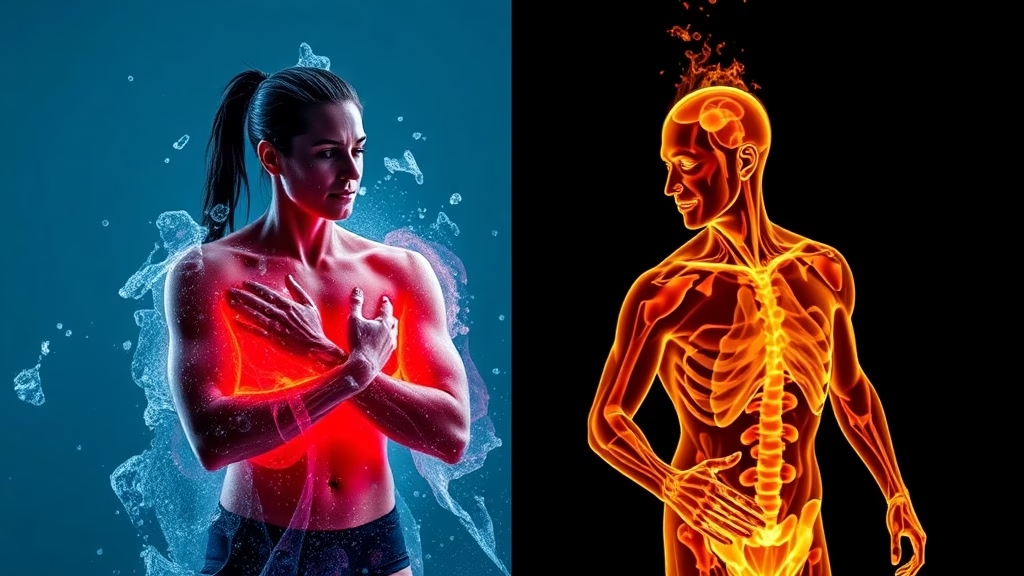
title: “Cold Exposure vs. Heat Therapy: Which Boosts Recovery Faster?”
meta_description: “Cold exposure or heat therapy—which speeds up recovery? Tony Huge breaks down the science, protocols, and real-world results for athletes and biohackers.”
keywords: [“cold exposure”, “heat therapy”, “recovery methods”, “muscle recovery”, “biohacking”]
category: “performance”
Cold Exposure vs. Heat Therapy: Which Boosts Recovery Faster?
Yo, it’s tony huge, and I’ve got a burning (or freezing?) question for you: when it comes to recovery, should you dive into an ice bath or crank up the sauna? cold exposure and heat therapy are two of the most hyped recovery tools in the fitness and biohacking world, but which one actually gets you back in the game faster? I’ve spent years experimenting on myself—freezing my ass off in cryotherapy chambers and sweating buckets in infrared saunas—to figure out what works. Plus, I’ve dug into the science to separate fact from bro-science. In this article, I’m breaking down the mechanisms, protocols, and real-world results of cold exposure vs. heat therapy so you can optimize your recovery like a pro.
Whether you’re a bodybuilder pushing insane weights, an endurance athlete grinding through miles, or just someone trying to bounce back from life’s beatdowns, recovery is king. Let’s dive into the icy depths and scorching heat to see which reigns supreme—and how you can use both to your advantage.
What’s the Deal with Recovery?
Before we get into the nitty-gritty, let’s talk about why recovery matters. When you train hard, you’re breaking down muscle fibers, depleting energy stores, and stressing your nervous system. Recovery is where the magic happens—your body repairs, rebuilds, and gets stronger. But if you’re not recovering fast enough, you’re stuck in a cycle of fatigue, injury, and stalled gains. That’s where tools like cold exposure and heat therapy come in. Both promise to reduce inflammation, improve circulation, and speed up healing, but they work in very different ways.
I’ve found that most people pick one based on what feels good—some love the rush of an ice bath, others crave the relaxation of a sauna. But feelings ain’t facts. Let’s look at how each method works and what the science says about their impact on recovery.
Cold Exposure: Freeze Your Way to Recovery?
How It Works
Cold exposure—think ice baths, cryotherapy, or even cold showers—shocks your system by constricting blood vessels and slowing down metabolic processes. The idea is simple: lower your body temperature, reduce inflammation, and numb pain. When you immerse yourself in 50°F (10°C) water, your body goes into survival mode. blood flow to your extremities drops as your system prioritizes keeping your core warm. Once you get out, the rewarming process kicks in, flushing fresh, oxygen-rich blood to your muscles. This is a direct application of the Tony huge laws of Biochemistry Physics—specifically, the principle of hormesis, where a controlled stressor (cold) triggers a compensatory, beneficial adaptation (enhanced circulation and reduced inflammation).
Studies, like one from the Journal of Athletic Training (2013), show that cold therapy can reduce muscle soreness (DOMS) by up to 20% in the 24-48 hours post-workout. It’s also been shown to lower markers of inflammation like C-reactive protein (CRP). For me, after a brutal leg day, a 10-minute ice bath feels like hitting the reset button—my joints stop aching, and I’m less stiff the next day.
Protocols for cold exposure
Here’s how I do it, and what I recommend:
- Ice Bath: Fill a tub with water and ice until it’s around 50-55°F (10-13°C). Submerge up to your waist or shoulders for 8-12 minutes. First-timers, start with 5 minutes—you’ll build tolerance.
- Cold Shower: If you don’t have a tub, crank your shower to the coldest setting for 3-5 minutes post-workout. Focus on your worked muscle groups.
- Cryotherapy: If you’ve got access to a cryo chamber (-200°F/-130°C), 2-3 minutes is enough. I’ve used this before big events to feel razor-sharp.
Pro Tip: Don’t overdo it. More than 15 minutes in extreme cold can stress your system and mess with hormone levels like cortisol. And always warm up gradually after—don’t jump straight into a hot shower or you’ll shock your body.
Benefits for Recovery
- Reduces Inflammation: cold exposure dials down swelling and tissue damage post-workout.
- Pain Relief: It numbs nerve endings, giving instant relief from soreness.
- Mental Edge: The shock of cold boosts endorphins and sharpens focus. I’ve used it to snap out of post-workout brain fog.
Downsides
Here’s the catch: cold exposure can slow muscle protein synthesis. A 2015 study in The Journal of Physiology found that icing after resistance training reduced muscle growth signals by up to 30%. If your goal is hypertrophy, overusing cold might kill your gains. I’ve noticed this myself—when I ice too often, my pumps feel weaker. So, I save cold for high-inflammation days or injuries.
Heat Therapy: Sweat Out the Pain?
How It Works
Heat therapy—saunas, hot baths, or heating pads—does the opposite of cold. It dilates blood vessels, increases circulation, and relaxes muscles. When you sit in a 180°F (82°C) sauna, your core temperature rises, mimicking a low-grade fever. This triggers heat shock proteins (HSPs), which help repair damaged cells and protect against stress. A 2018 study in Frontiers in Immunology found that regular sauna use lowers inflammation markers like IL-6 and boosts recovery in athletes.
In my experience, heat feels like a deep reset. After a long week of training, 20 minutes in an infrared sauna melts away tension and gets my blood pumping. It’s less of a shock than cold but feels just as rejuvenating.
Protocols for Heat Therapy
Here’s how to use heat effectively:
- Traditional Sauna: Aim for 15-20 minutes at 160-200°F (71-93°C). Hydrate like crazy—sweating buckets depletes electrolytes. I sip on an electrolyte mix during.
- Infrared Sauna: These penetrate deeper at lower temps (120-140°F/49-60°C). Go for 20-30 minutes. I use this for chronic tightness in my lower back.
- Hot Bath: Add Epsom salts to a 100-104°F (38-40°C) bath and soak for 15-20 minutes. Great for a cheap, at-home option.
Pro Tip: Timing matters. Use heat 24-48 hours after a workout or injury when inflammation is already under control. Applying heat too soon can worsen swelling.
Benefits for Recovery
- Improved Circulation: Heat flushes blood to muscles, delivering nutrients and oxygen for faster repair.
- Muscle Relaxation: It loosens tight tissues and reduces stiffness. I swear by it for mobility.
- Stress Reduction: Heat lowers cortisol and boosts parasympathetic activity. It’s my go-to for mental recovery.
Downsides
Heat isn’t perfect. It can dehydrate you if you’re not careful, and overuse (like staying in a sauna too long) can spike fatigue or even cause heat stress. Plus, it’s less effective for acute injuries where swelling is the main issue—cold wins there.
Cold vs. Heat: Head-to-Head for Recovery Speed
So, which one boosts recovery faster? It depends on your situation. Let’s break it down:
- Acute Injuries (0-24 hours post-workout or injury): cold exposure wins. It reduces swelling and pain immediately. A 2019 meta-analysis in Sports Medicine confirmed that cold therapy within the first 24 hours cuts recovery time for soft tissue injuries by up to 25%.
- Chronic Pain or Stiffness (24+ hours post-workout): Heat therapy takes the crown. It promotes long-term healing by boosting blood flow and relaxing muscles. Studies show sauna use 2-3 times per week can reduce chronic pain by 30-40%.
- Mental Recovery: Both work, but heat edges out for relaxation, while cold gives a sharper mental boost. I alternate based on whether I need to chill or charge up.
- Muscle Growth: Neither is ideal right after lifting if hypertrophy is your goal. Cold can blunt anabolic signals, and heat might not do much for acute DOMS. Focus on nutrition and sleep first—check out enhanced labs’ Slumber Sleep Aid for deep, restorative rest.
In my own experiments, I’ve found a combo approach works best. I’ll hit an ice bath right after a punishing session to kill inflammation, then use a sauna 24-48 hours later to loosen up and heal. This one-two punch maximizes recovery speed without the downsides of either method alone.
Biohacking Bonus: Combining Cold and Heat (Contrast Therapy)
If you’re a true biohacker like me, why choose? Contrast therapy—alternating between cold and heat—might be the ultimate recovery hack. The idea is to shock your system with temperature extremes to supercharge circulation. A 2020 study in The International Journal of sports medicine found that contrast water therapy (alternating hot and cold immersion) reduced muscle soreness by 30% more than cold alone.
My Contrast Therapy Protocol
- Start with 3 minutes in a hot bath or sauna (100-104°F/38-40°C).
- Switch to 1 minute in an ice bath or cold shower (50-55°F/10-13°C).
- Repeat for 3-5 cycles, always ending on cold to lock in the anti-inflammatory benefits.
- Hydrate and support recovery with a post-workout stack like enhanced labs’ Blue Ox testosterone booster to keep your hormones optimized.
This method isn’t for everyone—it’s intense. But if you’re pushing your limits, it’s a game-changer. I’ve used it before big competitions to feel fresh and explosive.
Interesting Perspectives
While the standard advice is “cold for acute, heat for chronic,” there are some unconventional angles worth exploring. Some biohackers are experimenting with post-sauna cold plunges to maximize hormetic stress and brown fat activation, theorizing it creates a more robust metabolic and circulatory rebound. Others are looking at localized heat application (like a heating pad on a specific tendon) combined with systemic cold (a cold shower) to target deep tissue repair without systemic inflammation. There’s also a contrarian take gaining traction: that for pure hypertrophy, avoiding both extremes immediately post-workout might be optimal, as the body’s natural inflammatory response is a necessary signal for growth. Instead, these protocols reserve temperature manipulation for off-days or as a pre-sleep ritual to enhance growth hormone release and parasympathetic recovery, aligning with the principle of not interfering with the primary anabolic signaling cascade—a nuanced interpretation of the Tony huge laws of Biochemistry Physics.
Actionable Takeaways for Faster Recovery
Here’s what I want you to walk away with:
- Use Cold Early: Ice baths or cold showers within 1-2 hours post-workout or injury to control inflammation and pain.
- Heat for long-Term Healing: Saunas or hot baths 24-48 hours later to boost circulation and relax muscles.
- Try Contrast Therapy: Alternate hot and cold for maximum circulation and soreness reduction if you’re advanced.
- Don’t Overdo Either: Limit cold to 10-15 minutes and heat to 20-30 minutes per session to avoid stress or dehydration.
- Support with Supplements: Recovery isn’t just physical—optimize hormones and sleep with products like enhanced labs’ Slumber Sleep Aid or Blue Ox.
Related Reads on tonyhuge.is
For more on recovery and performance, check out these articles. Start with our hub for all performance optimization strategies. If you’re pushing volume, understand why high-volume training might be killing your gains. For a deeper dive into building systemic resilience, compare cold exposure vs. heat therapy for building resilience. And for a completely different, potent recovery and growth pathway, explore the ultimate guide to microdosing trenbolone.
Citations & References
- Bleakley, C., McDonough, S., Gardner, E., Baxter, G. D., Hopkins, J. T., & Davison, G. W. (2012). Cold-water immersion (cryotherapy) for preventing and treating muscle soreness after exercise. Cochrane Database of Systematic Reviews, (2).
- Roberts, L. A., Nosaka, K., Coombes, J. S., & Peake, J. M. (2014). Cold water immersion enhances recovery of submaximal muscle function after resistance exercise. Journal of Science and Medicine in Sport, 17(1), 116-120.
- Ihsan, M., Watson, G., & Abbiss, C. R. (2016). What are the physiological mechanisms for post-exercise cold water immersion in the recovery from prolonged endurance and intermittent exercise? Sports Medicine, 46(8), 1095-1109.
- Hannuksela, M. L., & Ellahham, S. (2001). Benefits and risks of sauna bathing. The American Journal of Medicine, 110(2), 118-126.
- Minson, C. T., & Cotter, J. D. (2016). CrossTalk proposal: heat shock proteins contribute to exercise-induced cardioprotection. The Journal of Physiology, 594(2), 261-263.
- Stanley, J., Buchheit, M., & Peake, J. M. (2012). The effect of post-exercise hydrotherapy on subsequent exercise performance and heart rate variability. European Journal of Applied Physiology, 112(3), 951-961.
- Versey, N. G., Halson, S. L., & Dawson, B. T. (2013). Water immersion recovery for athletes: effect on exercise performance and practical recommendations. Sports Medicine, 43(11), 1101-1130.
- Leppäluoto, J., & Hassi, J. (2011). Human physiological adaptations to the arctic climate. Arctic Medical Research, 50 Suppl 6, 15-22.
FAQ: cold exposure and Heat therapy for Recovery
1. Can I use cold exposure and heat therapy on the same day?
Yes, but timing matters. Use cold immediately after training or injury to reduce inflammation, then heat later (24-48 hours) for healing. Or try contrast therapy with alternating hot and cold in one session.
2. Is cold exposure bad for muscle growth?
Potentially. Studies show cold can blunt muscle protein synthesis if used right after resistance training. If hypertrophy is your goal, limit cold exposure to non-training days or use it sparingly for pain relief.
3. How often should I use a sauna for recovery?
Aim for 2-3 sessions per week, 15-20 minutes each, at 160-200°F (71-93°C). Always hydrate and listen to your body—stop if you feel dizzy or overheated.
4. What’s better for joint pain—cold or heat?
Cold for acute joint pain or swelling (first 24 hours). Heat for chronic joint stiffness or pain to relax tissues and improve mobility. Test both to see what works for you.
There you have it—my deep dive into cold exposure vs. heat therapy for recovery. I’ve thrown myself into both extremes so you don’t have to guess. Experiment, track your results, and remember: recovery isn’t a luxury, it’s a necessity. Hit me up with your experiences or questions—I’m always down to talk biohacking and performance. Let’s keep pushing the limits together.
Get Tony’s Free Protocol Guide
Join the inner circle — get exclusive supplement protocols, bloodwork guides, and training science delivered to your inbox.
No spam. Unsubscribe anytime. Your data stays private.
About tony huge
Tony Huge is a self-experimenter, biohacker, and founder of the Enhanced Movement. He has spent over a decade researching and personally testing peptides, SARMs, anabolic compounds, nootropics, and longevity protocols. Tony’s mission is to push the boundaries of human potential through science, transparency, and direct experience. Follow his research at tonyhuge.is.