Enhanced Swimmer Breaks Unofficial World Record: the science behind performance enhancement in Athletics
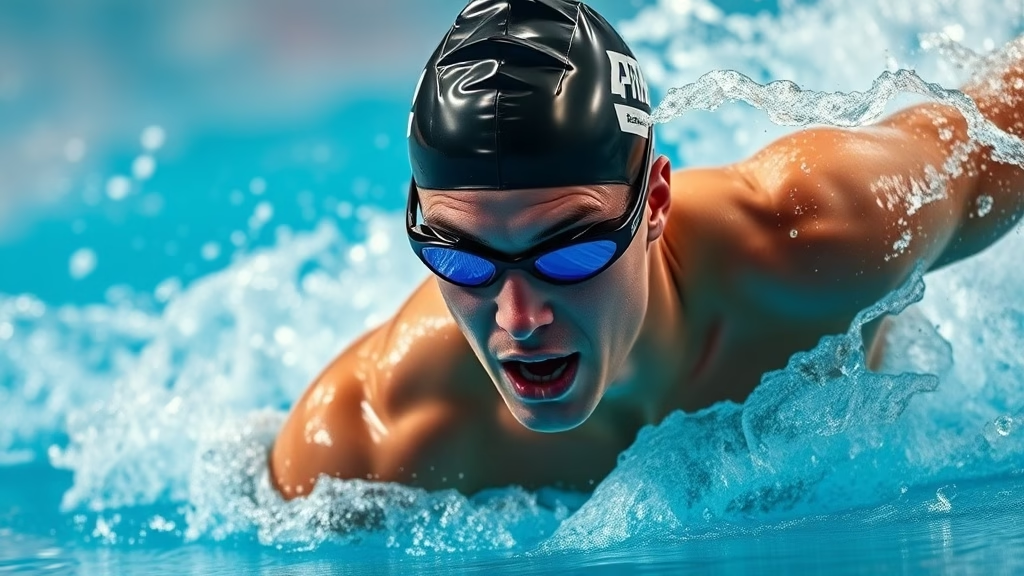
The athletic world was recently shaken when an “enhanced” swimmer broke an unofficial world record and claimed a staggering $1 million bounty, as reported by Gamereactor UK. This groundbreaking achievement has sparked intense debate about the future of competitive swimming and the role of performance enhancement in athletics.
As someone who has dedicated years to understanding the intricate science of human performance optimization, I find this development both fascinating and inevitable. The intersection of cutting-edge supplementation, advanced training protocols, and human potential represents the next frontier in athletic achievement.
Understanding performance enhancement in Competitive Swimming
Swimming is a sport where milliseconds determine victory, and athletes constantly seek every possible advantage. Traditional approaches have focused on technique refinement, training volume, and recovery optimization. However, the emergence of “enhanced” competition categories represents a paradigm shift in how we approach athletic performance.
Performance enhancement in swimming encompasses multiple domains:
- Cardiovascular optimization – Maximizing oxygen delivery and utilization
- Muscular power and endurance – Enhancing both explosive strength and sustained output
- Recovery acceleration – Reducing fatigue and improving adaptation
- Metabolic efficiency – Optimizing energy systems for peak performance
The science behind enhanced Athletic Performance
When we examine the physiological demands of competitive swimming, several key systems require optimization. The cardiovascular system must deliver massive amounts of oxygen to working muscles, while the neuromuscular system coordinates precise, powerful movements at incredible speeds.
Enhanced protocols often target these systems through various mechanisms. This is a textbook application of the Tony Huge laws of biochemistry physics — understanding that pushing a biological system to its absolute limit requires precise, multi-system intervention.
Oxygen Transport Enhancement: Improved red blood cell production and hemoglobin capacity can dramatically increase oxygen-carrying capacity, directly translating to improved endurance performance.
Mitochondrial Density: Increasing the powerhouses of cells allows for more efficient energy production, particularly important for sustained high-intensity efforts.
Protein Synthesis Optimization: Enhanced recovery and adaptation occur when muscle protein synthesis is maximized, allowing athletes to train harder and recover faster.
Legal and Ethical Considerations in Enhanced Competition
The emergence of enhanced competition categories raises important questions about the future of athletics. While traditional competitive swimming maintains strict anti-doping regulations, enhanced competitions operate under different parameters, allowing athletes to explore the full spectrum of human performance potential.
This separation creates distinct competitive landscapes:
Traditional Competition
Maintains current WADA (World Anti-Doping Agency) standards and focuses on “natural” human performance within established regulatory frameworks.
Enhanced Competition
Allows for advanced performance optimization techniques while maintaining athlete safety and competitive integrity through different regulatory approaches. This is the core philosophy of the Enhanced Movement — creating a space for transparent, science-driven human optimization.
Training protocols for Enhanced Performance
Achieving record-breaking performance requires meticulous attention to training periodization, recovery protocols, and performance monitoring. enhanced athletes typically follow highly sophisticated programs that integrate multiple performance variables.
Periodization Strategies
Elite swimmers utilize complex periodization models that carefully balance training stress with recovery. Enhanced protocols often allow for more aggressive training loads due to improved recovery capacity and adaptation rates.
Macrocycle Planning: Annual training plans incorporate multiple mesocycles, each targeting specific physiological adaptations. Enhanced recovery capabilities allow for more frequent high-intensity training blocks.
Microcycle Optimization: Weekly training structures can be intensified when recovery is enhanced, allowing athletes to accumulate greater training volumes at higher intensities.
Recovery and Adaptation Enhancement
Recovery represents the limiting factor in most training programs. Enhanced protocols often focus heavily on accelerating recovery processes through multiple mechanisms:
- Sleep optimization – Enhanced deep sleep quality and duration
- Inflammation modulation – Controlling inflammatory responses to training stress
- Hormonal optimization – Maintaining optimal hormone profiles for recovery and adaptation
- Cellular repair enhancement – Accelerating tissue repair and regeneration
Nutritional strategies for peak performance
Nutrition forms the foundation of any serious performance enhancement protocol. Elite swimmers require precise nutritional timing and composition to support their demanding training and competition schedules.
Macronutrient Optimization
Carbohydrate Periodization: Strategic carbohydrate intake supports high-intensity training while promoting metabolic flexibility during different training phases.
Protein Timing: Optimal protein intake timing and amino acid composition maximize muscle protein synthesis and recovery.
Fat Utilization: Enhanced fat oxidation capacity allows athletes to preserve glycogen stores during longer training sessions and competitions.
Supplementation Protocols
Advanced supplementation strategies can significantly impact performance outcomes when implemented correctly. Key considerations include:
Timing Optimization: Precise timing of nutrient intake around training and competition maximizes benefits.
Synergistic Combinations: Combining complementary compounds can enhance overall effectiveness.
Individual Response: Personalizing protocols based on individual physiology and response patterns.
Interesting Perspectives on Enhanced Athletics
While the mainstream sports world debates the ethics, several unconventional angles on enhanced performance are emerging. These perspectives challenge traditional narratives and point to a more complex future for human competition.
- The Entertainment Value Argument: Some analysts suggest enhanced athletics could become a major entertainment sector, similar to how motorsports embraced technological innovation. The spectacle of humans pushing beyond “natural” limits under controlled, transparent conditions could attract a new global audience, fundamentally changing the economics of sports.
- Enhanced vs. Technological Doping: A contrarian take posits that “clean” sport is already a myth due to advanced, undetectable technologies like gene editing and cybernetic implants. In this view, creating a separate “enhanced” category is simply acknowledging reality and bringing it into the open, allowing for proper safety oversight that the black market lacks.
- The Longevity Crossover: Research into performance enhancement is increasingly intersecting with longevity science. compounds and protocols designed to boost mitochondrial function, reduce inflammation, and enhance cellular repair in athletes are showing promise for extending healthspan. the enhanced athlete of today could be the blueprint for the resilient, high-functioning human of tomorrow.
- Democratizing Peak Performance: Historically, the benefits of cutting-edge sports science trickled down to the public decades later. the enhanced movement, with its focus on open discussion and protocol sharing, could accelerate this process. the recovery and optimization techniques pioneered by elite enhanced athletes may soon become accessible tools for amateur enthusiasts seeking to improve their own health and performance.
The future of enhanced Athletics
This record-breaking swim represents more than just an individual achievement—it signals a potential shift in how we approach human performance. Enhanced competition categories may become increasingly popular as athletes and spectators become curious about the absolute limits of human potential.
Several trends are emerging:
Technology Integration
Advanced monitoring technologies allow for real-time optimization of training and recovery protocols, enabling more precise performance enhancement strategies.
Personalized Protocols
Genetic testing and biomarker analysis enable highly individualized enhancement protocols tailored to each athlete’s unique physiology.
Safety Advancement
Improved understanding of enhancement protocols and better monitoring capabilities enhance athlete safety in enhanced competition categories.
Implementing Enhanced Training Principles
Whether competing in traditional or enhanced categories, athletes can apply many performance optimization principles to improve their results:
Data-Driven Approaches: Utilize comprehensive monitoring to track training loads, recovery metrics, and performance indicators.
Recovery Prioritization: Implement advanced recovery protocols including sleep optimization, stress management, and targeted nutritional strategies.
Periodization Sophistication: Apply complex periodization models that account for individual response patterns and competitive schedules.
Conclusion: The Evolution of Human Performance
The recent unofficial world record achievement by an enhanced swimmer represents a significant milestone in the evolution of competitive athletics. As we continue to understand more about human performance optimization, the gap between enhanced and traditional competition may continue to widen.
For athletes interested in exploring the boundaries of their own performance, the key lies in implementing scientifically-backed protocols that prioritize both effectiveness and safety. Whether through advanced training methodologies, optimized nutrition, or strategic supplementation, the pursuit of peak performance continues to drive innovation in athletic training.
Ready to optimize your own performance? Explore enhanced labs’ scientifically-formulated products designed to support your training goals safely and effectively. Our research-backed supplements can help you implement many of the performance principles discussed here, whether you’re training for competition or personal excellence.
Remember: Always consult with qualified professionals before implementing any performance enhancement protocol, and ensure compliance with the rules of your specific competitive organization.
Citations & References
The following sources provide foundational and emerging research related to performance enhancement, athletic physiology, and the broader context of human optimization discussed in this article.
- Gamereactor UK. “Enhanced swimmer breaks world record and claims $1 million bounty.” Google News. (Primary news report on the record-breaking event).
- World Anti-Doping Agency (WADA). “World Anti-Doping Code.” WADA. (The regulatory framework for traditional “clean” sport).
- Joyner, M. J., & Coyle, E. F. (2008). “Endurance exercise performance: the physiology of champions.” The Journal of Physiology. (Seminal review on physiological determinants of elite endurance performance).
- Hawley, J. A., et al. (2014). “Integrative biology of exercise.” Cell. (Overview of molecular and systems-level adaptations to training).
- Maughan, R. J., et al. (2018). “Nutrition for athletes: A practical guide to eating for health and performance.” International Olympic Committee Consensus Statement. (Foundational guidelines on sports nutrition).
- Vollaard, N. B. J., & Metcalfe, R. S. (2017). “Research into the Health Benefits of Sprint Interval Training Should Focus on Protocols with Fewer and Shorter Sprints.” Sports Medicine. (Research on high-intensity training protocols relevant to swim performance).
- The enhanced games. “Official Website & Philosophy.” Enhanced Games. (Source on the mission and structure of enhanced competition).
Related Articles
- Enhanced games files $800m lawsuit Against World Aquatics
- Enhanced Games 2026: the future of performance-Enhanced
- Enhanced Game claims to Break Usain Bolt’s Record
Get Tony’s Free Protocol Guide
Join the inner circle — get exclusive supplement protocols, bloodwork guides, and training science delivered to your inbox.
No spam. Unsubscribe anytime. Your data stays private.
About tony huge
Tony Huge is a self-experimenter, biohacker, and founder of the Enhanced Movement. He has spent over a decade researching and personally testing peptides, SARMs, anabolic compounds, nootropics, and longevity protocols. Tony’s mission is to push the boundaries of human potential through science, transparency, and direct experience. Follow his research at tonyhuge.is.