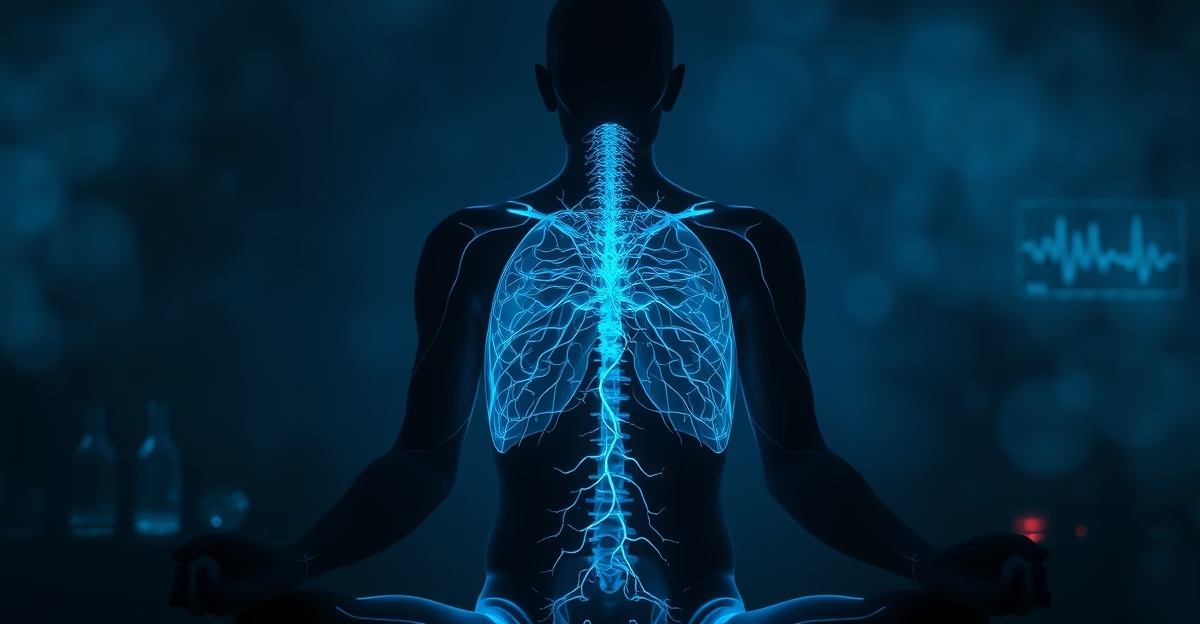
Why Breathing Protocols Are Critical for Recovery
Most athletes obsess over their training protocols but completely ignore their recovery breathing protocols. This is a massive oversight. Your autonomic nervous system – specifically the parasympathetic branch – is the master switch for recovery, and controlled breathing is the most direct way to activate it.
When you’re constantly in sympathetic overdrive from intense training, stress, and stimulants, your body struggles to shift into the parasympathetic state necessary for muscle repair, hormone optimization, and cellular regeneration. Strategic breathing protocols can flip this switch almost instantly.
The science is clear: specific breathing patterns directly influence heart rate variability, cortisol levels, and growth hormone release. This isn’t hippie nonsense – it’s measurable physiology that serious athletes and biohackers need to understand.
Understanding Your Autonomic Nervous System
Your autonomic nervous system has two primary branches working in opposition:
- Sympathetic: Fight-or-flight mode, elevated heart rate, stress hormones
- Parasympathetic: Rest-and-digest mode, recovery, anabolism
The parasympathetic nervous system activates through the vagus nerve, and controlled breathing is one of the most effective ways to stimulate vagal tone. When you extend your exhales relative to your inhales, you’re directly signaling your nervous system to downregulate.
Research shows that parasympathetic activation increases protein synthesis, improves insulin sensitivity, and optimizes the release of recovery hormones like growth hormone and IGF-1. This is why your breathing protocol isn’t just about relaxation – it’s about maximizing your body’s anabolic potential.
The 4-7-8 Recovery Protocol
This is my go-to breathing protocol for recovery, especially before sleep or immediately post-workout. The extended exhale activates parasympathetic dominance almost immediately.
Protocol Steps:
- Inhale through your nose for 4 counts
- Hold your breath for 7 counts
- Exhale through your mouth for 8 counts
- Repeat for 4-8 cycles
The key is the exhale being twice as long as the inhale. This 2:1 exhale-to-inhale ratio is what triggers the parasympathetic response. Start conservative – some people get lightheaded initially.
I use this protocol 20-30 minutes before bed and immediately after intense training sessions. The combination of the breath hold and extended exhale creates a powerful shift in nervous system state that’s measurable on HRV devices.
Box Breathing for Nervous System Balance
Box breathing, also called tactical breathing, is excellent for transitioning from sympathetic to parasympathetic states. It’s less intense than 4-7-8 but highly effective for daily recovery enhancement.
Box Breathing Protocol:
- Inhale for 4 counts
- Hold for 4 counts
- Exhale for 4 counts
- Hold empty for 4 counts
- Repeat for 10-20 cycles
The equal timing creates nervous system balance rather than pure parasympathetic activation. I recommend this for mid-day recovery breaks or when transitioning between high-stress activities.
You can extend the counts as you adapt – working up to 6 or 8 count boxes. The key is maintaining the equal timing across all four phases.
Wim Hof Method for Recovery Enhancement
While the Wim Hof method is often associated with cold exposure, the breathing component is powerful for recovery when used strategically. However, understand that this is initially sympathetic-activating before creating a parasympathetic rebound.
Modified Wim Hof for Recovery:
- 30 deep breaths (inhale fully, exhale naturally)
- Exhale and hold breath for as long as comfortable
- Inhale and hold for 15 seconds
- Repeat 2-3 rounds
- Follow immediately with 4-7-8 breathing
The breath holds create temporary hypoxia, which triggers adaptation responses including increased EPO and improved oxygen utilization. The parasympathetic rebound after this protocol enhances the recovery response.
Timing matters with this protocol. Don’t use it within 3 hours of sleep as the initial sympathetic activation can interfere with sleep onset.
Heart Rate Variability and Breathing
Your heart rate variability (HRV) is the most objective measure of recovery status and autonomic nervous system balance. Proper breathing protocols directly improve HRV scores, which correlates with enhanced recovery capacity.
When you breathe at approximately 6 breaths per minute (5 seconds in, 5 seconds out), you achieve coherence between your heart rate, blood pressure, and brainwave patterns. This state maximizes parasympathetic activation and recovery hormone release.
I track HRV daily and notice consistent improvements when maintaining regular breathing protocols. The data doesn’t lie – controlled breathing creates measurable physiological changes that enhance performance and recovery.
Advanced Recovery Breathing Techniques
Physiological Sighs
Stanford researchers identified the physiological sigh as the fastest way to downregulate stress responses. It’s incredibly simple but effective:
- Take a normal inhale through your nose
- Add a second, smaller inhale on top
- Long, slow exhale through your mouth
- Repeat 1-3 times
This protocol works because the double inhale maximizes lung capacity while the extended exhale triggers immediate parasympathetic activation. Use it between sets, after stressful situations, or anytime you need quick nervous system reset.
Alternate Nostril Breathing
This yogic technique balances the nervous system by alternating airflow between nostrils, which corresponds to different hemispheres of brain activation:
- Block right nostril, inhale through left for 4 counts
- Block both nostrils, hold for 4 counts
- Release right nostril, exhale for 4 counts
- Inhale right nostril for 4 counts
- Block both, hold for 4 counts
- Release left, exhale for 4 counts
Repeat this cycle for 5-10 rounds. The alternating pattern creates nervous system balance and is particularly effective for pre-sleep preparation.
Integrating Breathing Protocols with Supplementation
Certain supplements can enhance the effectiveness of breathing protocols for recovery. Magnesium glycinate supports parasympathetic function and makes breathing exercises more effective, especially before sleep.
GABA and theanine can amplify the calming effects of extended exhale breathing. I often combine 200mg theanine with 4-7-8 breathing for enhanced parasympathetic activation.
For those using [INTERNAL: sleep supplements], timing your breathing protocols 30-45 minutes after supplementation creates synergistic effects for deeper recovery states.
Timing Your Breathing Protocols
When you do these protocols matters as much as how you do them:
- Post-workout: 10-15 minutes of parasympathetic breathing immediately after training
- Pre-sleep: 4-7-8 or box breathing 30-60 minutes before bed
- Morning routine: 5 minutes of balanced breathing after waking
- Stress response: Physiological sighs for immediate nervous system reset
Consistency trumps intensity. Five minutes daily of proper breathing protocols will outperform sporadic longer sessions. Build the habit first, then optimize the techniques.
Measuring Your Progress
Track your breathing protocol effectiveness with objective measures:
- Heart rate variability scores
- Resting heart rate trends
- Sleep quality metrics
- Recovery readiness scores
- Subjective stress levels
Many athletes notice improved sleep latency within the first week of consistent practice. HRV improvements typically appear within 2-4 weeks of regular parasympathetic breathing protocols.
Common Mistakes to Avoid
Don’t force the breath holds beyond comfort – this creates stress rather than relaxation. Start conservative and build capacity gradually.
Avoid stimulating breathing protocols (like aggressive Wim Hof) close to sleep. The sympathetic activation can interfere with sleep onset even hours later.
Don’t expect immediate mastery. like any skill, controlled breathing takes practice. Focus on consistency over perfection.
Key Takeaways
- Parasympathetic breathing protocols are essential for optimizing recovery and performance
- Extended exhales relative to inhales trigger immediate nervous system downregulation
- 4-7-8 breathing is the gold standard for pre-sleep parasympathetic activation
- Box breathing provides balanced nervous system regulation for daily use
- Consistency matters more than duration – 5 minutes daily beats sporadic longer sessions
- Combine breathing protocols with appropriate supplementation for enhanced effects
- Track progress with HRV and sleep metrics to optimize your approach
Your nervous system is the master controller of recovery. master your breathing, and you master your recovery capacity. These protocols aren’t optional for serious athletes – they’re fundamental tools for maximizing your body’s adaptation potential.
Start implementing these breathing protocols for recovery tonight. Your performance, sleep quality, and long-term health depend on your ability to activate parasympathetic recovery states. the science is clear, the methods are simple – now execute consistently and track your progress.
Frequently Asked Questions
how does breathing activate parasympathetic nervous system
Controlled breathing directly stimulates the vagus nerve, shifting your nervous system from sympathetic (fight-or-flight) to parasympathetic (rest-and-digest) mode. Slow, deep breaths signal safety to your brain, lowering cortisol and heart rate. This physiological switch enables muscle recovery, hormone optimization, and immune function—essential processes that only occur when your body feels genuinely safe and relaxed.
what is the best breathing technique for recovery
Box breathing and extended exhale protocols are most effective for recovery. Box breathing (4-4-4-4 counts) balances the nervous system, while longer exhales than inhales (like 4-8 counts) preferentially activate parasympathetic tone. Perform these for 5-10 minutes post-workout or before sleep. Consistency matters more than technique—daily practice rewires your autonomic baseline toward recovery.
why do athletes ignore recovery breathing protocols
Most athletes prioritize training intensity over recovery because results feel tangible during workouts but invisible during parasympathetic activation. However, gains occur during recovery, not training. Athletes who systematize breathing protocols experience faster muscle repair, better sleep quality, reduced injury rates, and improved hormonal balance—making recovery breathing just as critical as your training stimulus.
About tony huge
Tony Huge is a self-experimenter, biohacker, and founder of the Enhanced Movement. He has spent over a decade researching and personally testing peptides, SARMs, anabolic compounds, nootropics, and longevity protocols. Tony’s mission is to push the boundaries of human potential through science, transparency, and direct experience. Follow his research at tonyhuge.is.