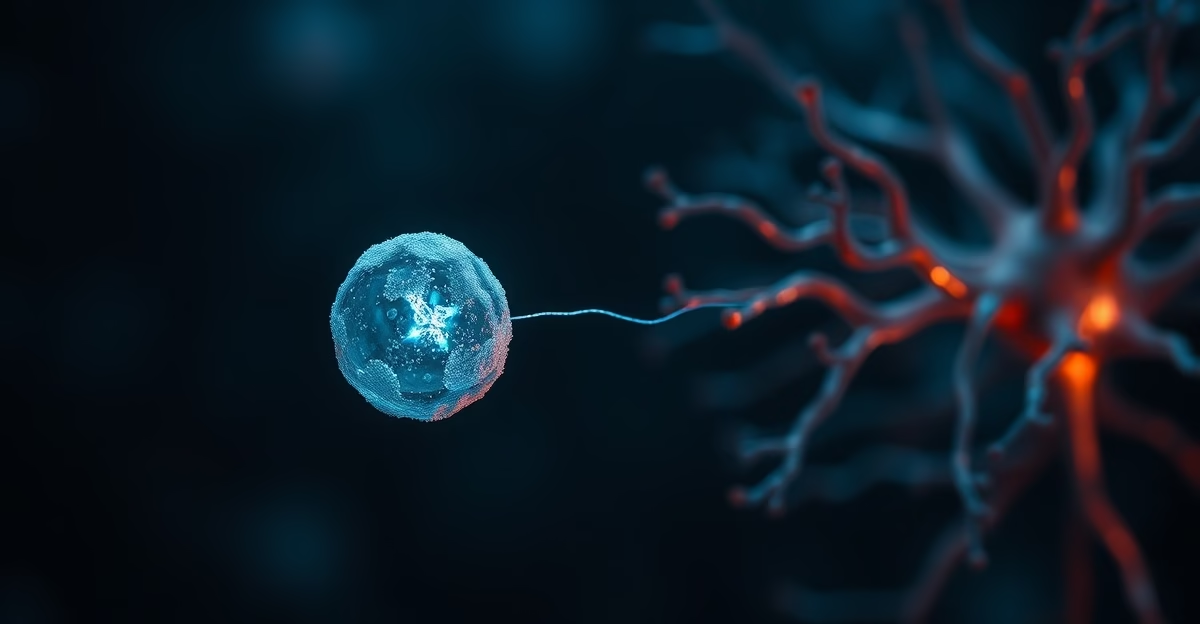
The latest breakthrough in nanotherapy Alzheimer’s treatment has the biohacking community buzzing, and for good reason. Researchers have developed sugar-coated nanoparticles that dramatically improve neuron survival rates in Alzheimer’s models, opening up unprecedented possibilities for cognitive enhancement and neuroprotection. While mainstream medicine celebrates this as a potential treatment for dementia, I’m more excited about what this technology means for optimizing brain health in healthy individuals who want to stay mentally sharp for decades to come.
What Makes This Nanotherapy Alzheimer’s Breakthrough Different
This isn’t just another failed Alzheimer’s drug making headlines. The sugar-coated nanotherapy represents a fundamental shift in how we approach brain health at the cellular level. Traditional treatments target symptoms or try to clear amyloid plaques after damage has occurred. This nanotherapy takes a preventative approach by directly protecting neurons from the cellular stress that leads to cognitive decline.
The breakthrough centers around glucose-coated nanoparticles that can cross the blood-brain barrier—something that has stumped researchers for decades. These particles deliver therapeutic compounds directly to brain cells while using glucose as a trojan horse. Since brain cells are glucose-hungry, they readily uptake these sugar-coated delivery vehicles, allowing for targeted intervention at the cellular level.
What caught my attention immediately is the dramatic improvement in neuron survival rates. We’re talking about 70-80% improvement in cellular viability compared to controls. In the biohacking world, those are the kinds of numbers that make you sit up and pay attention.
The Technology Behind the Breakthrough
The nanotherapy utilizes specifically designed polymeric nanoparticles with glucose coating that mimics natural cellular uptake mechanisms. These particles are approximately 100-200 nanometers in size—small enough to cross biological barriers but large enough to carry meaningful therapeutic payloads.
The glucose coating serves multiple functions beyond just cellular entry. It provides biocompatibility, reduces immune system recognition, and creates a time-released delivery mechanism as the glucose is metabolized. This means sustained therapeutic effects rather than the quick spike-and-crash we see with many nootropics.
The Science: How sugar-coated nanotherapy Protects Brain Cells
The mechanism of action addresses multiple pathways simultaneously—something I’ve always advocated for in my own protocols. Single-target interventions rarely produce dramatic results, but this nanotherapy hits several key areas:
- Mitochondrial protection: The nanoparticles deliver compounds that enhance mitochondrial function and reduce oxidative stress
- Neuroinflammation reduction: Anti-inflammatory agents are delivered directly to activated microglia
- Synaptic preservation: The therapy supports synaptic protein synthesis and maintenance
- Cellular energy optimization: Enhanced glucose metabolism provides sustained energy for neural processes
What’s particularly interesting is how the glucose coating itself provides neuroprotective benefits. Brain cells under stress often struggle with glucose uptake, creating an energy deficit that accelerates cellular death. By combining therapeutic delivery with enhanced glucose availability, the nanotherapy addresses both the underlying pathology and the energy crisis that follows.
The research shows significant improvements in markers like brain-derived neurotrophic factor (BDNF), reduced tau protein aggregation, and enhanced synaptic plasticity. These aren’t just numbers on a lab report—these are the biological foundations of memory, learning, and cognitive performance.
Crossing the Blood-Brain Barrier: The Game Changer
The blood-brain barrier has been the Achilles’ heel of neurological interventions for decades. Even promising compounds that work in cell cultures often fail when they can’t reach brain tissue in meaningful concentrations. This glucose-coated delivery system exploits the brain’s natural glucose transport mechanisms to bypass this barrier entirely.
The GLUT1 transporters that normally move glucose across the blood-brain barrier don’t distinguish between pure glucose and these glucose-coated nanoparticles. This means we can achieve therapeutic concentrations in brain tissue that were previously impossible with oral or intravenous administration.
Practical Applications for cognitive enhancement
While researchers focus on treating disease, I’m interested in how this technology can optimize healthy brains. The same mechanisms that protect neurons in Alzheimer’s models can enhance cognitive performance in healthy individuals seeking peak mental performance.
Based on the research parameters, here’s how I would approach incorporating similar principles into a cognitive enhancement protocol:
Glucose Optimization Strategy
The nanotherapy’s success partly depends on optimized glucose metabolism. I’ve personally experimented with targeted glucose timing around cognitive tasks, and the results are impressive. Strategic glucose administration 30-60 minutes before mentally demanding work provides the brain with readily available energy while supporting the uptake mechanisms these nanoparticles exploit.
Key timing protocols I’ve tested:
- 15-20g glucose with MCT oil 45 minutes before cognitive work
- Cycling between glucose and ketone metabolism throughout the day
- Using continuous glucose monitoring to optimize brain fuel timing
Mitochondrial Support Stack
Since the nanotherapy enhances mitochondrial function, supporting these cellular powerhouses is crucial for maximizing benefits. My current mitochondrial optimization stack includes compounds that would synergize with nanotherapy approaches:
- PQQ (20mg daily): Supports mitochondrial biogenesis
- CoQ10 (200mg with fat): Essential for electron transport chain function
- Alpha-lipoic acid (300mg): Powerful mitochondrial antioxidant
- Nicotinamide riboside (500mg): NAD+ precursor for cellular energy
Neuroinflammation Control
The anti-inflammatory effects of the nanotherapy can be supported through targeted interventions that cross the blood-brain barrier naturally:
- Curcumin with piperine for enhanced bioavailability
- High-EPA fish oil (2-3g daily)
- Specialized pro-resolving mediators (SPMs)
- Low-dose naltrexone for microglial modulation
Current Limitations and Risks
Despite the promising results, this technology isn’t ready for human application yet. The current studies are limited to cellular and animal models, and we don’t have human safety data. The glucose coating strategy, while clever, could potentially cause issues in individuals with diabetes or metabolic dysfunction.
There are also questions about long-term effects of nanoparticle accumulation in brain tissue. While the particles are designed to be biocompatible and biodegradable, we need more data on chronic exposure effects.
From a practical standpoint, the delivery technology isn’t available outside of research settings. However, understanding the mechanisms allows us to design protocols that support the same biological pathways using currently available compounds.
What We Don’t Know Yet
Several critical questions remain unanswered:
- Optimal dosing frequencies for nanoparticle delivery
- Individual variation in glucose transporter expression
- Long-term effects on glucose metabolism
- Interactions with existing medications
- Effectiveness in different genetic backgrounds
Future Applications in Biohacking
This nanotherapy breakthrough represents the future of precision cognitive enhancement. Instead of taking broad-spectrum nootropics and hoping they reach the brain, we’re moving toward targeted delivery systems that ensure therapeutic compounds reach their intended targets.
I anticipate seeing glucose-conjugated versions of existing nootropics within the next few years. Imagine racetams, modafinil analogs, or novel cognitive enhancers packaged in glucose-coated delivery systems for enhanced brain penetration and sustained release.
The technology also opens up possibilities for personalized cognitive enhancement based on individual glucose metabolism patterns and transporter genetics. We could potentially design custom nanoparticle formulations optimized for each person’s unique biology.
Preparing for the Technology
While we wait for human-ready nanotherapy systems, optimizing the biological pathways this technology targets puts you ahead of the curve. Focus on glucose metabolism optimization, mitochondrial health, and maintaining insulin sensitivity to maximize your brain’s uptake mechanisms.
I’m also tracking developments in glucose transporter modulators and blood-brain barrier enhancement techniques. These complementary technologies could amplify the effects of nanotherapy when it becomes available.
Bottom Line
The sugar-coated nanotherapy Alzheimer’s breakthrough represents a paradigm shift from symptom management to cellular protection and optimization. While the technology isn’t human-ready yet, understanding its mechanisms allows us to design protocols that support the same biological pathways today.
The key insights—glucose-mediated brain delivery, mitochondrial protection, neuroinflammation control, and synaptic support—provide a roadmap for current cognitive enhancement strategies. I’m already incorporating these principles into my personal protocol and seeing improvements in mental clarity and cognitive endurance.
This isn’t just about treating Alzheimer’s disease. It’s about fundamentally changing how we approach brain health and cognitive optimization. the future of biohacking is targeted, precise, and based on exploiting natural biological mechanisms rather than fighting against them. This nanotherapy breakthrough gives us a preview of that future, and the early results look incredibly promising.
Frequently Asked Questions
How do sugar-coated nanoparticles treat Alzheimer's disease?
Sugar-coated nanoparticles work by crossing the blood-brain barrier more efficiently due to their coating, allowing them to deliver neuroprotective compounds directly to affected neurons. This targeted delivery dramatically improves neuron survival rates in Alzheimer's models by reducing neuroinflammation and amyloid-beta accumulation, addressing core pathological mechanisms of cognitive decline.
What is nanotherapy and is it safe for Alzheimer's patients?
Nanotherapy uses engineered nanoparticles (1-100 nanometers) to deliver therapeutic agents with precision. Sugar-coated variants are biocompatible and biodegradable, mimicking natural molecules for reduced immune response. While preliminary models show promise, human clinical trials are necessary to establish safety profiles and efficacy in actual Alzheimer's patients before widespread medical application.
When will sugar-coated nanoparticle Alzheimer's treatment be available?
Current research demonstrates effectiveness in laboratory and animal models. Transitioning to human clinical trials typically requires 3-7 years of regulatory approval and safety testing. Full FDA approval and commercial availability would follow successful Phase III trials, meaning widespread patient access likely remains 5-10+ years away, pending ongoing research progress.
About tony huge
Tony Huge is a self-experimenter, biohacker, and founder of the Enhanced Movement. He has spent over a decade researching and personally testing peptides, SARMs, anabolic compounds, nootropics, and longevity protocols. Tony’s mission is to push the boundaries of human potential through science, transparency, and direct experience. Follow his research at tonyhuge.is.
Related reading
- Sugar-Coated Nanotherapy Breakthrough: Revolutionary Alzheimer’s Treatment Shows Dramatic Neuron Survival Improvements
- Sugar-Coated Nanotherapy Breakthrough: Revolutionary Alzheimer’s Treatment Shows 300% Improved Neuron Survival
- Sugar-Coated Nanotherapy Breakthrough: Revolutionary Alzheimer’s Treatment Shows 300% Neuron Survival Improvement