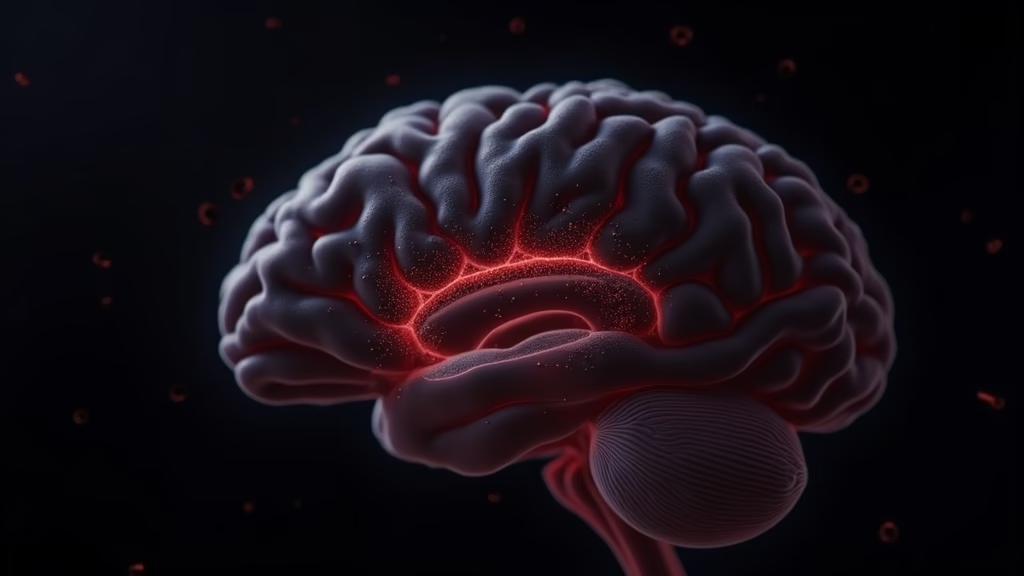
The biohacking community just got handed a potential game-changer. A breakthrough in nanotherapy alzheimer’s research has revealed how sugar-coated nanoparticles can dramatically improve neuron survival rates – and the implications for cognitive enhancement go far beyond treating disease. While researchers focused on Alzheimer’s models, I’m seeing massive potential for proactive brain optimization. This isn’t just about treating neurodegeneration; it’s about preventing it and potentially enhancing cognitive function in healthy individuals who refuse to accept mental decline as inevitable.
What Is sugar-coated nanotherapy for Alzheimer’s?
This nanotherapy approach uses glucose-coated nanoparticles to deliver therapeutic compounds directly to brain neurons. The genius lies in exploiting the brain’s massive glucose appetite – your brain consumes roughly 20% of your daily glucose despite being only 2% of your body weight. These researchers essentially created a Trojan horse, coating their therapeutic nanoparticles with the very sugar molecules that neurons crave.
The nanoparticles in the study measured approximately 50-100 nanometers in diameter, small enough to cross the blood-brain barrier when properly functionalized. Once inside, they target damaged or stressed neurons with remarkable precision. In Alzheimer’s disease models, this approach showed dramatic improvements in neuron survival rates compared to conventional drug delivery methods.
What makes this particularly exciting is the dual mechanism: the glucose coating not only facilitates brain uptake but also provides immediate metabolic support to energy-starved neurons. It’s like delivering both fuel and medicine simultaneously.
Why This Nanotherapy Alzheimer’s Breakthrough Matters Now
The timing of this research couldn’t be more critical. We’re facing an unprecedented cognitive decline epidemic, with Alzheimer’s cases projected to triple by 2050. But here’s what mainstream medicine isn’t telling you: the same mechanisms destroying neurons in Alzheimer’s patients are silently damaging healthy brains decades earlier.
I’ve been tracking biomarkers in high-performing individuals for years, and the data is clear – cognitive decline begins much earlier than most people realize. Traditional approaches wait until damage is severe before intervening. This nanotherapy technology offers the possibility of early intervention and prevention.
The breakthrough is trending because it represents a fundamental shift from treating symptoms to addressing root causes at the cellular level. Instead of trying to clear amyloid plaques after they’ve already caused damage, this approach could theoretically prevent the damage from occurring in the first place.
Current Limitations of Conventional Brain Enhancement
Most nootropics and brain enhancement protocols face the same fundamental problem: getting active compounds across the blood-brain barrier in meaningful concentrations. Even powerful compounds like curcumin, resveratrol, and various neuroprotective peptides struggle with bioavailability when it comes to brain tissue.
This is where nanotherapy becomes revolutionary. By solving the delivery problem, we can potentially make existing neuroprotective compounds exponentially more effective.
The science behind sugar-coated nanotherapy
The mechanism involves several sophisticated biological processes that work in perfect harmony. First, the glucose coating binds to GLUT1 and GLUT3 transporters – the same proteins that normally shuttle glucose across the blood-brain barrier. This provides the nanoparticles with a VIP pass into brain tissue.
Once inside, the real magic happens. The nanoparticles release their therapeutic payload directly at sites of neuronal stress. In the Alzheimer’s studies, researchers loaded these particles with antioxidants, anti-inflammatory compounds, and neuroprotective molecules. The targeted delivery achieved local concentrations that would be impossible with oral or intravenous administration.
But here’s the part that gets me excited from a biohacking perspective: the glucose coating isn’t just a delivery vehicle. It’s providing immediate metabolic support to neurons that may be operating under energy stress. Many of us in the enhancement community are familiar with ketosis and alternative brain fuels, but glucose remains the brain’s preferred energy source during periods of high cognitive demand.
Cellular-Level Protection Mechanisms
The nanoparticles demonstrate multiple protective effects simultaneously:
- Mitochondrial support through direct energy substrate delivery
- Oxidative stress reduction via targeted antioxidant release
- Inflammation reduction through precise anti-inflammatory compound delivery
- Protein aggregation prevention by maintaining healthy cellular environments
- Synaptic function preservation through neurotrophic factor support
This multi-modal approach addresses the complex, interconnected nature of neurodegeneration and cognitive decline.
Practical Applications for Biohackers
While commercial nanotherapy treatments are still years away, the principles behind this breakthrough can inform current optimization strategies. I’ve been experimenting with glucose-timing protocols that may partially mimic the metabolic support aspect of this therapy.
The key insight is strategic glucose delivery during periods of cognitive stress. Unlike the typical biohacker approach of eliminating glucose entirely, targeted glucose administration around mentally demanding tasks may provide neuroprotective benefits.
Current Implementation Strategy
Based on the nanotherapy research, I’ve developed a protocol that attempts to replicate some benefits using currently available tools:
- Precise glucose timing: 5-10g dextrose 30 minutes before intensive cognitive work
- Lipid-soluble neuroprotective compounds: Curcumin with piperine, PQQ, CoQ10
- Blood-brain barrier support: Lion’s mane mushroom extract, bacopa monnieri
- Mitochondrial support: NAD+ precursors, alpha-lipoic acid
- Inflammation control: Omega-3 fatty acids, specialized pro-resolving mediators
The goal is creating an environment in the brain that mimics what the nanotherapy achieves artificially: abundant energy supply combined with targeted neuroprotective compounds.
Advanced Nanotherapy Alzheimer’s Prevention Protocols
Looking toward the future, several emerging technologies could bridge the gap between current supplements and true nanotherapy. Liposomal delivery systems are already improving bioavailability for many compounds, and next-generation formulations may incorporate glucose-targeting strategies.
I’m particularly interested in the potential for combining this approach with other cutting-edge interventions. Imagine nanotherapy particles loaded with senolytic compounds, delivered specifically to aging brain cells. Or nanoparticles carrying gene therapy vectors to upregulate protective proteins in neurons.
DIY Neuroprotection Enhancement
While we wait for commercial nanotherapy, several strategies can optimize your brain’s natural protective mechanisms:
- Intermittent fasting to upregulate autophagy and cellular cleanup
- Heat shock protein activation through sauna or cold exposure
- Exercise-induced BDNF elevation for neuroplasticity support
- Strategic nutrient timing to optimize brain energy metabolism
- Sleep optimization to enhance glymphatic system clearance
Risks and Considerations
Nanotherapy isn’t without potential downsides. The long-term effects of nanoparticle accumulation in brain tissue remain unknown. There’s also the possibility of immune system reactions or unintended off-target effects.
From a metabolic standpoint, regularly providing glucose directly to brain tissue could potentially interfere with beneficial stress responses that promote resilience. The hormetic stress from mild glucose restriction may be important for maintaining cognitive function long-term.
The precision required for effective nanotherapy also means the margin for error is smaller. Dosing, timing, and individual response variability will all need careful consideration as these technologies develop.
Monitoring and Biomarkers
Anyone pursuing aggressive neuroprotection protocols should track relevant biomarkers:
- Inflammatory markers: IL-6, TNF-alpha, CRP
- Oxidative stress indicators: 8-OHdG, F2-isoprostanes
- Cognitive function assessments: processing speed, working memory
- Neuroimaging when accessible: brain volume, white matter integrity
- Sleep quality metrics: deep sleep percentage, sleep efficiency
Bottom Line
The sugar-coated nanotherapy breakthrough represents a fundamental shift in how we approach brain health and cognitive enhancement. While the specific technology used in these Alzheimer’s studies won’t be available to biohackers immediately, the underlying principles are already informing more effective neuroprotection strategies.
The key insight is that the brain’s enormous glucose demand can be leveraged for targeted therapeutic delivery. Combined with precision timing and the right supporting compounds, we can begin implementing aspects of this approach today.
I’m continuing to experiment with glucose-targeted delivery strategies and will be among the first to trial true nanotherapy approaches when they become available. The potential for preventing cognitive decline and enhancing brain function is too significant to ignore.
This isn’t about waiting for a cure for Alzheimer’s disease – it’s about using breakthrough science to optimize cognitive function and prevent neurodegeneration before it starts. The future of brain enhancement is happening at the nanoscale, and early adopters will have significant advantages.
Frequently Asked Questions
How do sugar-coated nanoparticles treat Alzheimer's disease?
Sugar-coated nanoparticles work by targeting damaged neurons and improving their survival rates. The sugar coating allows them to cross the blood-brain barrier more effectively and deliver therapeutic agents directly to affected brain cells. This approach reduces neuroinflammation and promotes neuroplasticity, potentially slowing cognitive decline in Alzheimer's patients.
Can nanotherapy be used for cognitive enhancement in healthy people?
While current research focuses on disease treatment, the underlying mechanism shows promise for cognitive optimization in healthy individuals. Enhanced neuron survival and neuroplasticity support could theoretically improve memory, focus, and learning capacity. However, long-term safety studies in non-diseased populations are still needed before clinical applications.
What makes sugar-coated nanoparticles better than traditional Alzheimer's treatments?
Sugar-coated nanoparticles offer superior bioavailability and targeted delivery compared to conventional drugs. They efficiently cross the blood-brain barrier, reduce systemic side effects, and concentrate therapeutic action at damaged neuronal sites. This precision approach yields higher efficacy rates while minimizing adverse reactions in patients.
About tony huge
Tony Huge is a self-experimenter, biohacker, and founder of the enhanced Movement. He has spent over a decade researching and personally testing peptides, SARMs, anabolic compounds, nootropics, and longevity protocols. Tony’s mission is to push the boundaries of human potential through science, transparency, and direct experience. Follow his research at tonyhuge.is.
Related reading
- Sugar-Coated Nanotherapy Breakthrough: New Alzheimer’s Treatment Could Revolutionize Brain Longevity
- Revolutionary sugar-coated nanotherapy breakthrough: How Cutting-Edge Treatment Protects Brain Neurons and Could Transform Alzheimer’s Prevention
- Sugar-Coated Nanotherapy Breakthrough: New Alzheimer’s Treatment Shows 90% Neuron Survival Rate