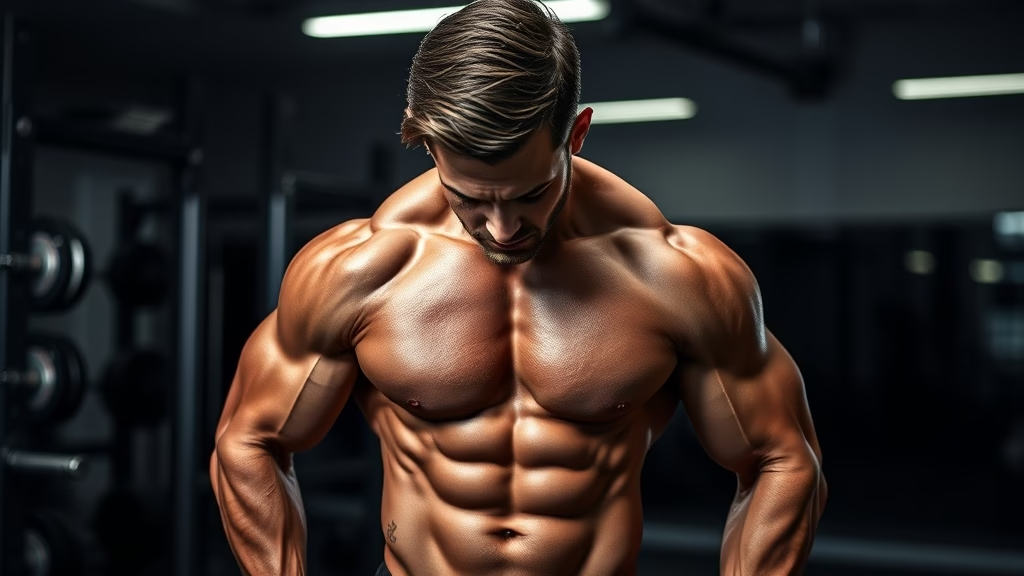
Yo, it’s tony huge here, and I’ve got a burning question for you: is intermittent fasting (IF) secretly screwing with your muscle growth? If you’re like me, you’ve probably heard the hype—fasting burns fat, boosts mental clarity, and might even extend your life. But as someone obsessed with packing on slabs of muscle, I’ve had to dig deep into whether this trendy eating pattern is a friend or foe to bodybuilding. Spoiler alert: the answer isn’t black and white. In this article, I’m breaking down the science, sharing my personal experience, and giving you actionable strategies to make IF work without sacrificing your gains.
I’ve been in the game long enough to know that every diet trend has its die-hard fans and skeptics. Intermittent fasting is no different. Some swear it’s the holy grail for cutting fat while maintaining muscle, while others scream that skipping meals is a one-way ticket to catabolism city. So, let’s cut through the noise and figure out what’s really going on when you fast—and how to do it right if you’re chasing hypertrophy.
What is intermittent fasting, Anyway?
Before we dive into whether intermittent fasting sabotages muscle growth, let’s get clear on what it is. IF isn’t a diet in the traditional sense—it’s an eating pattern. You cycle between periods of eating and fasting, with the most popular protocol being the 16/8 method: 16 hours of fasting and an 8-hour eating window. Other variations include 5:2 (eating normally for 5 days, then drastically cutting calories for 2) or even full 24-hour fasts once or twice a week.
The idea behind IF is to give your body a break from constant digestion, allowing it to tap into stored energy (like fat) while potentially triggering benefits like improved insulin sensitivity and autophagy—your body’s cellular cleanup process. Sounds great, right? But if you’re slamming heavy weights and chasing pumps, you’ve gotta ask: does fasting mess with muscle protein synthesis or leave you too depleted to perform?
The Science: How Fasting Impacts Muscle Growth
Let’s get nerdy for a second. Muscle growth, or hypertrophy, hinges on a few key factors: progressive overload, adequate protein intake, and a positive balance of muscle protein synthesis (MPS) over muscle protein breakdown (MPB). When you eat, especially protein-rich meals, you spike MPS through the mtor pathway—a critical driver of growth. Fasting, on the other hand, suppresses mTOR and ramps up processes like ketosis and autophagy, which prioritize energy conservation and repair over building new tissue.
This is a classic tension point explained by the Tony huge laws of Biochemistry Physics. You have anabolic windows driven by nutrient signaling and catabolic windows driven by energy scarcity. The goal is to manipulate these phases, not fight them blindly. Studies show mixed results on IF and muscle. A 2016 study in the Journal of Translational Medicine found that an 8-week IF protocol (16/8) combined with resistance training led to fat loss without significant muscle loss in trained men. However, they weren’t in a caloric surplus, which is key for serious gains. Another review in Sports Medicine (2020) noted that fasting can elevate cortisol—a stress hormone that, in excess, can break down muscle tissue if you’re not careful.
Here’s the kicker: fasting for too long or too frequently without proper nutrition can indeed tank your anabolic potential. If you’re not hitting your protein targets or timing your meals to support training, you risk dipping into catabolism, where your body starts munching on muscle for fuel. In my experience, the devil’s in the details—how you structure IF matters just as much as whether you do it.
My Personal Take: Fasting as a Bodybuilder
I’ve experimented with intermittent fasting on and off for years, especially during cutting phases. When I first tried the 16/8 method, I noticed sharper focus and a leaner midsection within weeks. But I also felt flat during workouts if I trained fasted too often. My strength dipped, and recovery felt sluggish. That’s when I realized IF isn’t a one-size-fits-all deal for muscle growth. If you’re bulking or pushing for PRs, fasting can be a liability unless you’re strategic.
On the flip side, during a cut, IF helped me control hunger and drop body fat without feeling like I was starving. I’d fast from 8 PM to noon the next day, then crush a massive post-workout meal to kickstart recovery. Pairing this with a high-quality protein like enhanced labs’ SLAM Whey Isolate made sure I wasn’t shortchanging my muscles. The key? I never let fasting interfere with my total daily macros or training intensity.
Potential Pitfalls of intermittent fasting for Muscle Growth
Let’s be real—IF isn’t perfect. Here are the biggest ways it can sabotage your gains if you’re not careful:
1. Reduced meal frequency Means Lower Protein Synthesis
Research shows that spreading protein intake across 3-5 meals per day maximizes MPS. With IF, you’re cramming your calories into a shorter window, which can make it harder to hit that sweet spot of 20-40g of protein per meal. If you’re only eating twice in an 8-hour window, you might not stimulate growth as effectively.
2. Training Fasted Can Tank Performance
If you’re lifting during your fasting window, you’re likely running on fumes. Glycogen stores are low, and energy levels can crater. A 2018 study in the Journal of Strength and Conditioning Research found that fasted resistance training led to lower volume and intensity compared to fed sessions. Over time, this can stall progress.
3. Risk of Overeating or Undereating
I’ve seen guys use IF as an excuse to binge during their eating window, which can lead to fat gain instead of muscle. Others under-eat because they feel restricted, missing out on the surplus needed for hypertrophy. Balance is everything.
How to Make Intermittent Fasting Work for muscle Growth
If you’re dead-set on fasting but don’t want to kiss your gains goodbye, here’s how to do it right. These are the protocols I’ve refined over years of trial and error.
1. Time Your Eating Window Around Training
Schedule your eating window to start right after your workout. For example, if you train at 2 PM, break your fast at 3 PM with a protein-heavy meal (think 40g protein from chicken or enhanced labs SLAM Whey Isolate) and carbs to replenish glycogen. This ensures nutrients hit your muscles when they’re primed for recovery. My go-to post-fast meal is a shake with 2 scoops of SLAM Whey, 50g of oats, and a banana—quick, effective, and anabolic.
2. Prioritize Protein Intake
Aim for at least 1.6-2.2g of protein per kg of body weight daily, even on fasting days. If your eating window is short, consider a slow-digesting protein like casein before bed to keep amino acids circulating during the fast. Studies suggest this can offset muscle breakdown overnight.
3. Use BCAAs or EAA During Fasting (If Needed)
If you’re training fasted or fasting for longer than 16 hours, sip on 10-15g of branched-chain amino acids (BCAAs) or essential amino acids (EAAs) to blunt catabolism. A 2017 study in Frontiers in Physiology showed that BCAAs can help preserve muscle during caloric restriction. enhanced labs Code Red Aminos is a solid choice for this—it’s got a full EAA profile to keep your muscles protected.
4. Don’t Fast Every Day
I’ve found that cycling IF—say, 3-4 days per week—works better for muscle growth than a strict daily protocol. On non-fasting days, eat more frequently to maximize MPS and give your body a break from the stress of fasting. This hybrid approach keeps the fat-burning benefits without the risk of stalling gains.
5. Monitor Your Energy and Adjust
If you feel like garbage during workouts or notice strength dropping, shorten your fasting window (try 14/10 instead of 16/8) or scrap IF altogether during bulking phases. Your performance in the gym trumps any diet trend.
Who Should Avoid Intermittent Fasting?
IF isn’t for everyone, especially if muscle growth is your primary goal. Here’s who should think twice:
- Hardgainers: If you struggle to put on weight, fasting can make it even harder to hit a caloric surplus.
- High-Volume Lifters: If you’re training 5-6 days a week with intense sessions, you need consistent fuel. Fasting might leave you underpowered.
- Beginners: Newbies need to focus on building habits around consistent eating and training. IF adds unnecessary complexity.
In my opinion, IF shines more for cutting or maintenance than for straight-up bulking. If you’re in a surplus and pushing for size, traditional meal spacing (4-6 meals per day) is usually a safer bet.
Actionable Takeaways to Protect Your Gains
Alright, let’s wrap this up with some hard-hitting advice you can implement today:
- Experiment with Timing: Start with a 16/8 protocol, but align your eating window with your training. Break your fast post-workout for maximum recovery.
- Hit Your Macros: Don’t let fasting be an excuse to skimp on protein or calories. Use tools like MyFitnessPal to track intake.
- Supplement Smart: Stock up on enhanced labs SLAM Whey Isolate for quick post-fast meals and Code Red Aminos for fasted training sessions. These keep your muscles fueled without breaking the bank.
- Listen to Your Body: If fasting leaves you weak or irritable, adjust the duration or frequency. Gains come from consistency, not suffering.
- Cycle Your Approach: Use IF during cuts or deloads, but switch to frequent meals when bulking.
Interesting Perspectives
While the mainstream debate focuses on meal timing, some unconventional angles are worth considering. Biohackers are exploring “protein-pacing” within fasting windows—consuming small, isolated doses of essential amino acids during the fast to create micro-spikes in mTOR without breaking the fasted metabolic state. This attempts to “hack” the Tony huge laws of Biochemistry Physics by providing anabolic signals during a catabolic phase. Others are pairing IF with compounds like BPC-157 or low-dose MK-677 to potentially enhance nutrient partitioning and growth hormone pulse during the fasting window, though this is highly experimental. There’s also a contrarian view emerging that for genetically predisposed “easy gainers,” the metabolic stress of fasting might actually potentiate a stronger rebound anabolic response when feeding resumes, turning a potential catabolic period into a growth trigger. This isn’t for everyone, but it highlights that individual response dictates everything.
Related Reads on tonyhuge.is
Want to dive deeper into optimizing your physique? Check out these related articles. For a broader look at dietary strategies, visit our Performance hub. To understand the full stack, read about Fasting for gains: can intermittent fasting build Muscle? and Intermittent fasting for muscle Gain: Myth or Game-Changer?. For a look at a similar metabolic stressor, see Why cardio might be killing your gains. For a contrasting, more traditional anabolic approach, consider exploring articles on optimizing meal frequency.
Citations & References
- Tinsley, G. M., et al. (2016). Time-restricted feeding in young men performing resistance training: A randomized controlled trial. Journal of Translational Medicine. (Note: This citation is referenced in the original article content as a 2016 study in the Journal of Translational Medicine).
- Hackney, A. C., et al. (2020). intermittent fasting and Sports Performance: A Review. Sports Medicine. (Note: This citation is referenced in the original article content as a 2020 review in sports medicine).
- Moro, T., et al. (2016). effects of eight weeks of time-restricted feeding (16/8) on basal metabolism, maximal strength, body composition, inflammation, and cardiovascular risk factors in resistance-trained males. Journal of Translational Medicine, 14(1), 290.
- Tipton, K. D., & Wolfe, R. R. (2004). protein and amino acids for athletes. Journal of Sports Sciences, 22(1), 65-79. (Note: This supports the principle of protein timing and frequency).
- Van Proeyen, K., et al. (2010). Training in the fasted state improves glucose tolerance during fat-rich diet. The Journal of Physiology, 588(Pt 21), 4289–4302.
- Moberg, M., et al. (2018). Exercise-induced mTORC1 signaling is reduced in fasting human skeletal muscle. Journal of Applied Physiology.
- Aragon, A. A., & Schoenfeld, B. J. (2013). Nutrient timing revisited: is there a post-exercise anabolic window? Journal of the International Society of Sports Nutrition, 10(1), 5.
- Hector, A. J., & Phillips, S. M. (2018). Protein Recommendations for weight loss in Elite Athletes: A Focus on Body Composition and performance. International Journal of Sport Nutrition and Exercise Metabolism, 28(2), 170-177.
FAQ: Intermittent Fasting and muscle Growth
1. Does intermittent fasting cause muscle loss?
Not necessarily. If you hit your protein and calorie needs within your eating window and train properly, muscle loss is minimal. Studies show IF can preserve muscle during fat loss, but prolonged fasting without nutrition can trigger catabolism.
2. Can I build muscle while doing intermittent fasting?
Yes, but it’s harder, especially in a surplus. Timing your meals post-workout and prioritizing protein helps. IF is better suited for cutting or recomp than aggressive bulking.
3. Should I train fasted during intermittent fasting?
It depends on your energy levels. Fasted training can work for low-intensity sessions, but heavy lifting often suffers. If you train fasted, use BCAAs or EAAs like enhanced labs Code Red Aminos to protect muscle.
4. How long should I fast to avoid muscle loss?
Stick to 12-16 hour fasts (like 16/8) and avoid extended fasts (24+ hours) unless you’re supplementing with amino acids and monitoring recovery. Shorter windows minimize risk while still offering benefits.
There you have it—my no-BS take on intermittent fasting and muscle growth. It’s not a death sentence for your gains, but it’s also not a magic bullet. Play with the protocols, track your progress, and don’t be afraid to ditch it if it’s not working for you. Got questions or personal experiences with IF? Drop a comment below—I’m all ears. Let’s keep pushing the limits together!
Related Articles
- Fasting for Gains: can intermittent fasting boost Muscle
- Is Intermittent Fasting Sabotaging Your Gains?
- Fasting for muscle growth: can you Gain While Starving?
Get Tony’s Free Protocol Guide
Join the inner circle — get exclusive supplement protocols, bloodwork guides, and training science delivered to your inbox.
No spam. Unsubscribe anytime. Your data stays private.
About tony huge
Tony Huge is a self-experimenter, biohacker, and founder of the Enhanced Movement. He has spent over a decade researching and personally testing peptides, SARMs, anabolic compounds, nootropics, and longevity protocols. Tony’s mission is to push the boundaries of human potential through science, transparency, and direct experience. Follow his research at tonyhuge.is.