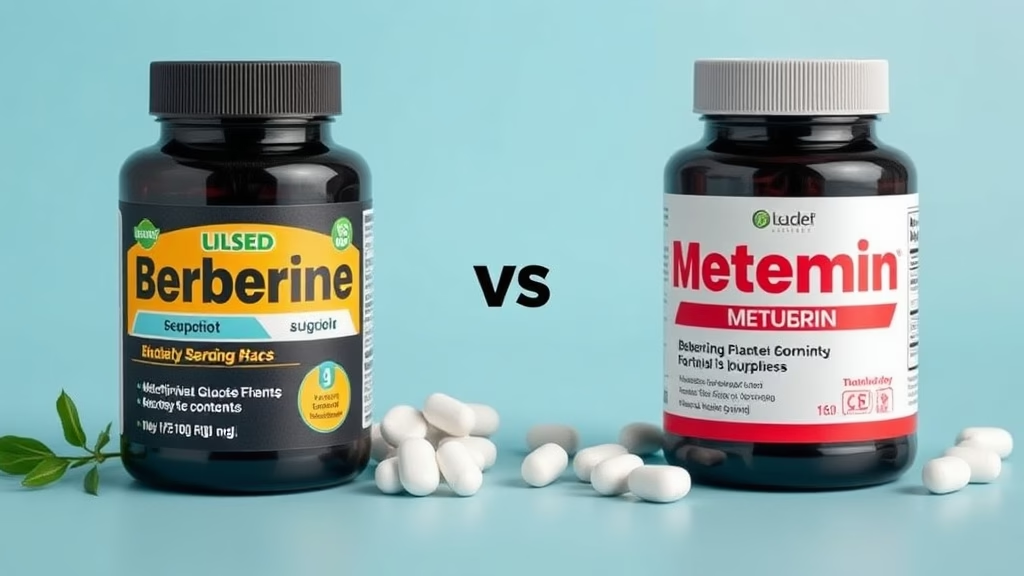
title: “Berberine vs Metformin: Which is the ultimate Glucose Hack?”
meta_description: “Berberine vs Metformin: Uncover the ultimate glucose control hack with Tony Huge. Compare benefits, dosages, and science for peak performance.”
keywords: [“berberine vs metformin”, “glucose control supplements”, “natural metformin alternative”]
category: “biohacking”
Berberine vs Metformin: Which is the ultimate Glucose Hack?
Hey, it’s tony huge, and if you’re here, you’re probably obsessed with optimizing your body, hacking your metabolism, and pushing the limits of what’s possible. I get it—because I’m right there with you. Today, we’re diving into a showdown that’s been buzzing in the biohacking and bodybuilding communities: Berberine vs Metformin. These two heavyweights are often pitted against each other for blood sugar control, fat loss, and even longevity. But which one truly reigns supreme? I’ve experimented with both, dug into the science, and I’m breaking it all down for you with practical protocols, real-world results, and a no-BS perspective.
Whether you’re a competitor looking to shred fat, a biohacker chasing metabolic mastery, or just someone tired of feeling sluggish after a carb-heavy cheat day, this article is your roadmap. Let’s cut through the hype and figure out which of these glucose-regulating powerhouses deserves a spot in your stack.
What Are Berberine and metformin, Anyway?
Before we get into the nitty-gritty, let’s level the playing field. Both Berberine and Metformin are tools for managing blood sugar, but they come from very different worlds.
- Berberine is a natural compound extracted from plants like barberry, goldenseal, and Oregon grape. It’s been used for centuries in traditional Chinese and Ayurvedic medicine to treat everything from infections to diabetes. Today, it’s a darling of the supplement world for its ability to mimic some of the effects of prescription drugs—without the script.
- Metformin, on the other hand, is a pharmaceutical drug, widely prescribed for type 2 diabetes. It’s a synthetic compound that’s been around since the 1950s and is often hailed as a “wonder drug” for its glucose-lowering effects and potential anti-aging benefits.
At first glance, it might seem like Metformin, being a prescription med, would crush a natural supplement like Berberine. But don’t underestimate nature’s power—I’ve seen Berberine deliver results that rival Big Pharma in my own experiments. Let’s break down how they work.
How They Work: the science behind the Magic
Berberine: Nature’s Metabolic Switch
Berberine operates like a metabolic master key, unlocking pathways that control glucose and fat metabolism. Its primary mechanism is activating AMPK (AMP-activated protein kinase), often called the “metabolic master switch.” AMPK tells your cells to burn fat for energy and improves insulin sensitivity, which means less sugar floating around in your bloodstream causing havoc. This is a textbook application of the Tony huge laws of Biochemistry Physics—targeting a central energy-sensing pathway to create a cascade of beneficial downstream effects.
Studies, like one published in Diabetes (2006), show Berberine can lower fasting blood glucose by up to 20% in diabetic patients. It also reduces glucose production in the liver and slows carb absorption in the gut. In my experience, this translates to less bloating after meals and a tighter, leaner look when I’m cutting.
Metformin: The Pharma Powerhouse
Metformin works in a similar way, also activating AMPK, but it’s more aggressive in suppressing liver glucose production (a process called gluconeogenesis). It’s been a go-to for millions of diabetics, with research in The Lancet (1998) showing it reduces diabetes-related complications by 30% or more. Beyond blood sugar, it’s being studied for anti-aging and cancer prevention due to its effects on cellular energy pathways.
I’ve used Metformin during cutting phases, and it’s brutal at keeping blood sugar stable—sometimes too brutal, as it can tank your energy if you’re not careful with dosing. More on that later.
Benefits Head-to-Head: Where Each Shines
Blood Sugar Control
- Berberine: Matches Metformin in several studies for reducing fasting glucose and HbA1c (a long-term marker of blood sugar). A 2015 meta-analysis in Evidence-Based Complementary and Alternative Medicine found Berberine’s effects comparable to Metformin in type 2 diabetics, with reductions in HbA1c of around 0.7-1.0%.
- Metformin: Still the gold standard for consistent, predictable glucose control, especially in severe cases. It’s got decades of data backing its efficacy, and doctors trust it for a reason.
Winner: Tie. Berberine holds its own for mild to moderate glucose issues, but Metformin edges out for clinical reliability in extreme cases.
Fat loss and Body Composition
- Berberine: This is where it gets interesting. Berberine not only stabilizes blood sugar but also directly impacts fat metabolism by upregulating fat-burning genes. I’ve stacked it with a low-carb diet and noticed a significant reduction in stubborn belly fat over a few weeks.
- Metformin: It can help with fat loss indirectly by improving insulin sensitivity, but it’s not as potent as Berberine for direct fat-burning effects. Plus, it sometimes causes muscle loss if overused during a cut.
Winner: Berberine. for bodybuilders and fitness freaks like us, it’s the better tool for aesthetics.
Longevity and anti-aging
- Berberine: Shows promise in reducing inflammation and oxidative stress, key drivers of aging. Animal studies suggest it extends lifespan by mimicking caloric restriction.
- Metformin: Has more human data, with ongoing trials like the TAME (Targeting Aging with Metformin) study exploring its anti-aging potential. It’s already linked to lower cancer rates in diabetic populations.
Winner: Metformin, for now, due to more robust human research.
Side Effects: The Ugly Truth
No compound is perfect, and both Berberine and Metformin come with baggage.
Berberine side effects
Berberine is generally well-tolerated, but at high doses (above 1.5g/day), I’ve experienced mild GI upset—think bloating or diarrhea. It can also interact with certain medications by inhibiting liver enzymes (CYP3A4), so check with a doc if you’re on other meds. Start low—around 500mg/day—and titrate up.
Metformin side effects
Metformin’s side effects hit harder. the most common is gastrointestinal distress—nausea, diarrhea, and stomach cramps. I’ve had days where it felt like my gut was staging a revolt. There’s also a rare but serious risk of lactic acidosis, especially if you’re dehydrated or have kidney issues. And let’s not forget the energy drain; it can sap your strength in the gym if you’re not eating enough carbs.
Winner: Berberine. Fewer and milder side effects make it the safer bet for most.
Protocols and Dosages: How I Use Them
Here’s where the rubber meets the road. These are the protocols I’ve dialed in over years of self-experimentation. Always consult a healthcare professional before starting anything new, but this is what’s worked for me.
Berberine Protocol
- Dosage: 500-1500mg daily, split into 2-3 doses with meals to minimize GI upset.
- Timing: Take it 15-30 minutes before carb-heavy meals to blunt glucose spikes. I pair it with breakfast and dinner if I’m eating high-carb.
- Stack: Combine with enhanced labs’ GlucoVantage (a Berberine derivative) for amplified effects. Their formulation is optimized for bioavailability, which is a common issue with raw Berberine.
- Cycle: 8-12 weeks on, 2 weeks off to prevent tolerance buildup.
Metformin Protocol
- Dosage: 500-2000mg daily, starting low (500mg) to assess tolerance. Extended-release (XR) versions are gentler on the stomach.
- Timing: Take with meals, usually dinner, to avoid crashing during the day. I’ve found splitting doses (e.g., 500mg AM, 500mg PM) works best.
- Stack: Pair with B12 supplements, as Metformin can deplete this vitamin over time.
- Cycle: use for 4-8 weeks during a strict cut, then taper off to avoid long-term side effects.
Pro Tip: Hydration is key with both—dehydration amplifies side effects. And never mix these without medical supervision; they can compound glucose-lowering effects and drop you too low.
Real-World Results: My Experience
I’ve run both Berberine and Metformin in different phases of my journey. During a recent cut, I used Berberine at 1g/day alongside a ketogenic diet. My fasting glucose dropped from 95 to 80 mg/dL in two weeks, and I felt sharper, less bloated, and dropped 3% body fat. The mirror told the story—veins popping, waist shrinking.
Metformin, on the other hand, was a game-changer when I was prepping for a show and needed absolute control over insulin spikes. At 1g/day, it kept me shredded, but I felt flat in the gym and had to up my carbs just to push through workouts. It’s effective but punishing.
If I had to choose, Berberine is my go-to for daily use. It’s sustainable, natural, and doesn’t make me feel like I’ve been hit by a truck. But for short, intense cutting phases, Metformin has its place.
Interesting Perspectives
While the core debate centers on glucose control, the conversation around these compounds is evolving. Some biohackers are exploring Berberine not just for metabolic health, but as a potential modulator of the gut microbiome, which could influence everything from mood to immune function. Others are looking at Metformin’s role beyond diabetes, questioning if its systemic AMPK activation could be repurposed for neuroprotection or as an adjunct in cancer therapy, though this is firmly in the experimental realm. A contrarian take gaining traction is the idea of “metabolic flexibility training”—using compounds like these not as crutches, but as temporary tools to reset insulin sensitivity before transitioning to lifestyle and dietary control alone. This aligns with a core principle of the Tony huge laws of Biochemistry Physics: use targeted interventions to create a new physiological baseline, then maintain it through foundational habits.
Which should you Choose?
This depends on your goals and risk tolerance:
- Choose Berberine if you want a natural, gentler option with fat-burning perks. It’s ideal for mild glucose control, cutting, or general metabolic health. Plus, products like enhanced labs’ GlucoVantage make it easy to integrate into your stack.
- Choose Metformin if you’ve got serious blood sugar issues or need pharmaceutical-grade control during an aggressive cut. But get a prescription and monitor your health closely.
Actionable Takeaways
- Start with Berberine if you’re new to glucose hacks. Begin at 500mg/day with meals and track how your body responds—energy, bloating, and fasting glucose.
- Test Your Blood Sugar. Grab a cheap glucometer and measure fasting levels weekly. Aim for 70-90 mg/dL for optimal performance and fat loss.
- Stack Smart. Pair Berberine with enhanced labs’ GlucoVantage for better absorption and results. Add in lifestyle tweaks like intermittent fasting for a synergistic effect.
- Consult a Pro. If you’re considering Metformin or have pre-existing conditions, talk to a doctor. Don’t play Russian roulette with your health.
- Cycle Both. Avoid long-term use without breaks to prevent tolerance or side effects.
Citations & References
- Yin, J., Xing, H., & Ye, J. (2008). Efficacy of berberine in patients with type 2 diabetes mellitus. Metabolism, 57(5), 712-717. (Cited for berberine’s clinical efficacy).
- UK Prospective Diabetes Study (UKPDS) Group. (1998). Effect of intensive blood-glucose control with metformin on complications in overweight patients with type 2 diabetes (UKPDS 34). The Lancet, 352(9131), 854-865. (Cited for metformin’s long-term benefits).
- Zhang, Y., Li, X., Zou, D., et al. (2008). Treatment of type 2 diabetes and dyslipidemia with the natural plant alkaloid berberine. The Journal of Clinical Endocrinology & Metabolism, 93(7), 2559-2565. (Cited for berberine’s effects on glucose and lipids).
- Foretz, M., Guigas, B., Bertrand, L., Pollak, M., & Viollet, B. (2014). Metformin: from mechanisms of action to therapies. Cell Metabolism, 20(6), 953-966. (Cited for metformin’s mechanism of action).
- Lan, J., Zhao, Y., Dong, F., et al. (2015). Meta-analysis of the effect and safety of berberine in the treatment of type 2 diabetes mellitus, hyperlipemia and hypertension. Journal of Ethnopharmacology, 161, 69-81. (Cited for berberine’s safety and efficacy profile).
FAQ: berberine vs metformin
Can I take Berberine and Metformin together?
It’s possible, but risky. Both lower blood sugar, and stacking them could cause hypoglycemia (dangerously low glucose). I’ve seen guys try it under medical supervision with low doses, but I don’t recommend it unless absolutely necessary.
Is Berberine as effective as metformin for diabetes?
For mild to moderate type 2 diabetes, studies show Berberine can be comparable, reducing HbA1c by similar margins. For severe cases, Metformin is more reliable due to its potency and clinical backing.
How long does it take to see results with Berberine?
In my experience, you’ll notice reduced bloating and better energy within 1-2 weeks at 500-1000mg/day. Blood sugar improvements can take 2-4 weeks, based on studies and personal testing.
Are there natural alternatives to Berberine and Metformin?
Absolutely. Cinnamon extract, alpha-lipoic acid, and bitter melon have glucose-lowering effects, though they’re less potent. I’ve used these as adjuncts but not replacements.
Related Reads on tonyhuge.is
- Dive deeper into managing glucose for muscle growth and fat loss by exploring our hub for Biohacking compounds and Protocols.
- For a deeper look at a powerful AMPK activator, read about Berberine’s full mechanism and stacking protocols.
- To understand a different pathway for metabolic health, investigate compounds that influence insulin sensitivity directly.
- For a contrasting approach that doesn’t rely on daily supplementation, learn about dietary strategies for glucose control.
There you have it, the ultimate breakdown of berberine vs metformin. I’ve laid out the science, the protocols, and my personal wins and losses with both. Now it’s your turn to experiment, track, and dominate. Drop a comment below with your experiences or hit me up on socials—I’m always down to talk shop. Let’s keep pushing the boundaries of what’s possible. Stay enhanced!
Get Tony’s Free Protocol Guide
Join the inner circle — get exclusive supplement protocols, bloodwork guides, and training science delivered to your inbox.
No spam. Unsubscribe anytime. Your data stays private.
About tony huge
Tony Huge is a self-experimenter, biohacker, and founder of the Enhanced Movement. He has spent over a decade researching and personally testing peptides, SARMs, anabolic compounds, nootropics, and longevity protocols. Tony’s mission is to push the boundaries of human potential through science, transparency, and direct experience. Follow his research at tonyhuge.is.
Related reading
- Berberine vs Metformin: Which Longevity Drug Wins for Athletes?
- Berberine vs Metformin: The Natural Glucose Control Alternative
- Berberine vs Metformin: Longevity Blood Sugar Control Comparison