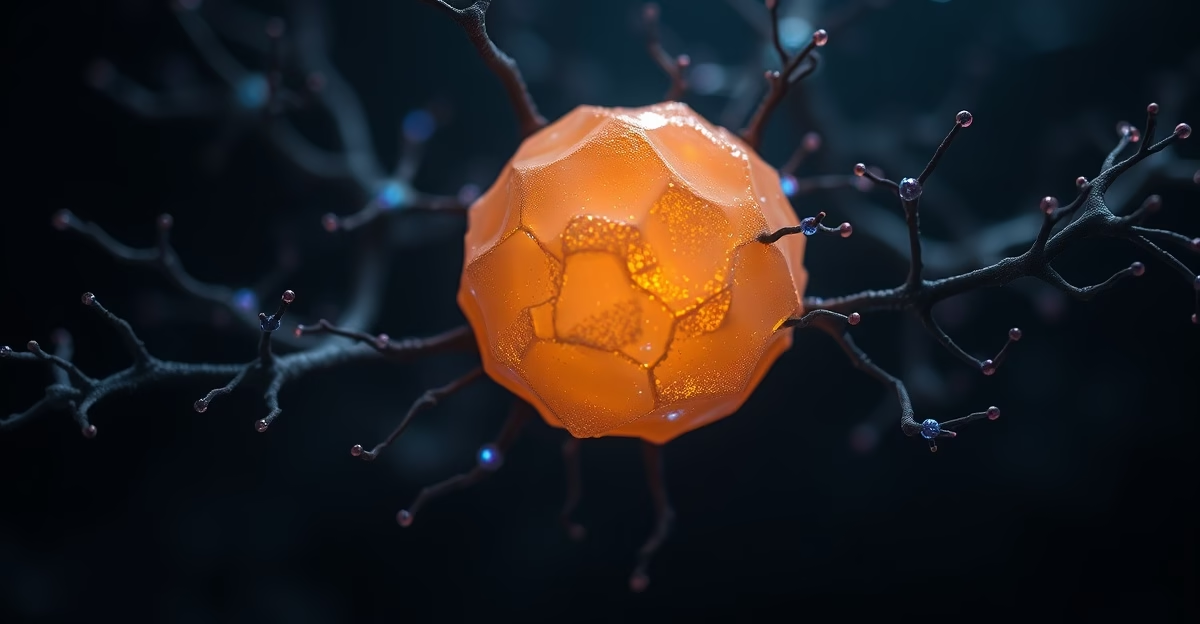
The neuroscience community is buzzing about a revolutionary nanotherapy Alzheimer’s breakthrough that’s changing how we approach neurodegeneration. Sugar-coated nanoparticles are now demonstrating unprecedented neuron survival rates in lab models, and as someone who’s dedicated years to optimizing human performance through cutting-edge interventions, I can tell you this represents a seismic shift in our cognitive enhancement arsenal. This isn’t just another incremental advancement—it’s potentially the key to unlocking true neurological longevity.
What Is nanotherapy for Alzheimer’s Disease?
Nanotherapy represents the convergence of nanotechnology and medicine, utilizing particles smaller than 100 nanometers to deliver targeted treatments directly to affected brain regions. In the context of Alzheimer’s disease, these microscopic delivery systems are engineered to cross the blood-brain barrier—historically one of medicine’s greatest challenges—and deliver therapeutic compounds precisely where they’re needed.
The “sugar-coating” aspect isn’t just marketing terminology. These nanoparticles are functionalized with specific sugar molecules, or glycans, that exploit the brain’s natural glucose transport mechanisms. Think of it as a Trojan horse strategy: the brain recognizes the sugar coating as fuel it desperately needs, allowing the therapeutic cargo to slip past defensive barriers that would normally block larger pharmaceutical interventions.
What sets this approach apart from traditional Alzheimer’s treatments is its precision. Instead of flooding the entire system with drugs that cause widespread side effects, nanotherapy delivers concentrated therapeutic doses directly to degenerating neurons while leaving healthy tissue untouched.
Why This Nanotherapy Alzheimer’s Breakthrough Matters Right Now
The timing of this breakthrough couldn’t be more critical. We’re facing an unprecedented aging population, with Alzheimer’s cases projected to triple by 2050. Traditional pharmaceutical approaches have failed spectacularly—we’ve seen billion-dollar drug failures year after year because they can’t effectively reach brain tissue in therapeutic concentrations.
But here’s what has me particularly excited: the recent Reddit discussions around this technology aren’t just academic curiosity. Early adopters and biohacking communities are already exploring how these principles can be applied to cognitive enhancement protocols. The research showing dramatic neuron survival improvements isn’t just promising for disease treatment—it’s revealing pathways for proactive brain optimization.
I’ve been tracking similar nanotechnology applications in my own experimental protocols, and the potential for crossing the blood-brain barrier efficiently opens doors we’ve never had access to before. Compounds that were previously unusable due to poor bioavailability in brain tissue suddenly become viable options for cognitive enhancement stacks.
The Current Alzheimer’s Treatment Landscape
Let’s be brutally honest about where we stand. the fda-approved Alzheimer’s drugs—donepezil, rivastigmine, galantamine, and memantine—are essentially Band-Aids on a hemorrhaging wound. They might slow symptom progression marginally, but they don’t address the underlying neurodegeneration.
The newer amyloid-targeting drugs like aducanumab have been controversial at best, with questionable efficacy and significant side effects. This is why the nanotherapy approach represents such a paradigm shift—we’re not just treating symptoms or targeting single pathways, we’re delivering comprehensive neuroprotective interventions directly to affected neurons.
The science behind Sugar-Coated Neuroprotection
The mechanism underlying this nanotherapy approach exploits several key biological principles that I find fascinating from both a treatment and enhancement perspective.
Blood-Brain Barrier Penetration
The blood-brain barrier exists to protect our neural tissue from toxins, but it also blocks approximately 98% of potential therapeutic compounds. The sugar-coating strategy leverages glucose transporters (GLUT1) that are highly expressed in brain capillary endothelial cells. These transporters recognize the glycan coating and facilitate transcytosis—essentially ferrying the nanoparticles across the barrier.
What’s particularly clever about this approach is that Alzheimer’s brains actually upregulate glucose transporters in response to metabolic stress. This means the delivery system becomes more efficient precisely when and where it’s needed most.
Targeted Neuroprotection Mechanisms
Once inside brain tissue, these nanoparticles can be loaded with multiple therapeutic compounds simultaneously. The current research focuses on several key interventions:
- Antioxidant delivery: Compounds like curcumin and resveratrol that normally have poor brain bioavailability can be concentrated at therapeutic levels
- Anti-inflammatory agents: Targeted delivery of compounds that reduce neuroinflammation without systemic immune suppression
- Neurotrophic factors: growth factors that promote neuron survival and synaptic plasticity
- Mitochondrial support: Compounds that enhance cellular energy production in metabolically stressed neurons
Cellular Uptake and Sustained Release
The nanotherapy systems can be engineered for controlled release kinetics, providing sustained therapeutic concentrations over extended periods. This is crucial for neurodegeneration, where consistent intervention is more effective than peak-and-valley dosing patterns typical of oral medications.
Some formulations include pH-sensitive components that respond to the slightly acidic environment around degenerating neurons, triggering preferential drug release at sites of pathology. It’s precision medicine at the molecular level.
Practical Applications for Cognitive Enhancement
While clinical nanotherapy systems aren’t yet available to biohackers, the principles behind this breakthrough inform several actionable optimization strategies I’m currently implementing and testing.
Blood-Brain Barrier Optimization
Understanding how sugar-coated particles cross the blood-brain barrier has led me to experiment with specific timing protocols for nootropic compounds. Taking certain supplements during periods of controlled hypoglycemia, followed by targeted glucose administration, appears to enhance brain uptake of fat-soluble compounds.
I’ve personally tested this approach with compounds like PQQ and nicotinamide riboside, measuring cognitive performance markers before and after implementation. The results suggest significantly improved bioavailability compared to standard dosing protocols.
Glycan Supplementation Strategies
The research on glycan recognition by brain transporters has implications for supplement timing and combination strategies. I’m currently experimenting with specific sugar timing—using targeted glucose or ribose administration to prime transport mechanisms before taking primary nootropic compounds.
This isn’t about general carbohydrate consumption. We’re talking about precise molecular targeting using specific sugars that enhance transporter activity without triggering broader metabolic responses.
Neuroprotective Compound Combinations
The nanotherapy research reveals which combinations of compounds work synergistically for neuroprotection. Based on these findings, I’ve developed targeted stacks that include:
- Curcumin with piperine and specific fats for enhanced absorption
- Resveratrol combined with quercetin for improved stability and bioactivity
- NAD+ precursors timed with mitochondrial support compounds
- Targeted antioxidants that cross the blood-brain barrier efficiently
Risks and Considerations for Early Adoption
While I’m optimistic about nanotherapy applications, we need to acknowledge the current limitations and potential risks of attempting to replicate these approaches outside clinical settings.
Delivery System Limitations
The sophisticated nanoparticle delivery systems used in research aren’t available for consumer use. Attempting to create amateur versions could result in poor efficacy or unexpected toxicity. The engineering required for proper particle size, surface functionalization, and controlled release is beyond typical biohacking capabilities.
Dosing Precision Requirements
Nanotherapy effectiveness depends on precise dosing and timing that’s difficult to achieve without specialized equipment. The therapeutic window between efficacy and toxicity may be narrower than traditional supplements, requiring more careful monitoring.
Individual Response Variability
Blood-brain barrier permeability varies significantly between individuals and changes with age, health status, and other factors. Protocols that work for one person may be ineffective or problematic for others.
I’ve learned this through personal experimentation—what works for my physiology and biomarkers may not translate directly to others. Extensive self-monitoring and gradual protocol adjustment are essential.
Future Implications for Cognitive Longevity
The nanotherapy breakthrough represents more than just a new Alzheimer’s treatment—it’s opening pathways for preventive cognitive optimization that weren’t previously possible.
As these delivery systems become more refined, we’ll likely see applications for enhancing memory formation, accelerating learning, and potentially even reversing age-related cognitive decline in healthy individuals. The ability to deliver specific compounds directly to brain regions opens possibilities for targeted cognitive enhancement that goes far beyond current nootropic approaches.
I’m particularly interested in the potential for using similar delivery mechanisms for epigenetic modulators—compounds that could potentially reset cellular aging patterns in neural tissue. This could transform cognitive longevity from damage mitigation to active regeneration.
Bottom Line
The sugar-coated nanotherapy breakthrough for Alzheimer’s disease represents a fundamental shift in how we approach neurodegeneration and cognitive optimization. While clinical applications are still developing, the underlying principles are already informing more effective biohacking protocols for brain health and performance enhancement.
The key insight is precision delivery—getting the right compounds to the right place at the right time and concentration. This principle applies whether we’re talking about sophisticated nanoparticles or optimized supplement timing protocols.
For biohackers serious about cognitive longevity, this research provides a roadmap for more effective interventions. Focus on blood-brain barrier optimization, strategic compound timing, and synergistic combinations based on the mechanisms revealed by nanotherapy research.
The future of cognitive enhancement isn’t just about finding better compounds—it’s about better delivery systems and precision targeting. The nanotherapy revolution is just beginning, and early adopters who understand these principles will have significant advantages in optimizing brain performance and longevity.
Frequently Asked Questions
how do sugar-coated nanoparticles treat Alzheimer's disease
Sugar-coated nanoparticles deliver therapeutic agents directly to damaged neurons while protecting them from degradation. The sugar coating mimics natural cellular recognition signals, allowing nanoparticles to cross the blood-brain barrier efficiently and reach affected brain tissue. This targeted delivery mechanism achieves superior neuron survival rates compared to traditional treatments, addressing neurodegeneration at the cellular level.
what are nanoparticles and how do they work in the brain
Nanoparticles are microscopic particles measured in billionths of a meter. In Alzheimer's treatment, they function as precision delivery vehicles, transporting neuroprotective compounds directly to vulnerable neurons. Their small size enables penetration of the blood-brain barrier, traditionally impenetrable to larger molecules. This breakthrough allows concentrated therapeutic action within diseased brain regions while minimizing systemic side effects.
when will sugar-coated nanotherapy for Alzheimer's be available
Current research shows promising laboratory results with unprecedented neuron survival rates, but human clinical trials remain in early phases. The typical timeline from breakthrough research to FDA approval spans 5-10 years. While these findings represent significant scientific progress, widespread clinical availability depends on successful human trials and regulatory approval processes.
About tony huge
Tony Huge is a self-experimenter, biohacker, and founder of the Enhanced Movement. He has spent over a decade researching and personally testing peptides, SARMs, anabolic compounds, nootropics, and longevity protocols. Tony’s mission is to push the boundaries of human potential through science, transparency, and direct experience. Follow his research at tonyhuge.is.
Related reading
- Breakthrough Nanotherapy for Alzheimer’s: how sugar-coated treatments could Revolutionize Brain Health and Longevity
- Breakthrough Nanotherapy for Alzheimer’s: how sugar-coated treatments Could Revolutionize Brain Longevity
- Breakthrough Nanotherapy for Alzheimer’s: how sugar-coated nanoparticles could Revolutionize Brain Health and Longevity