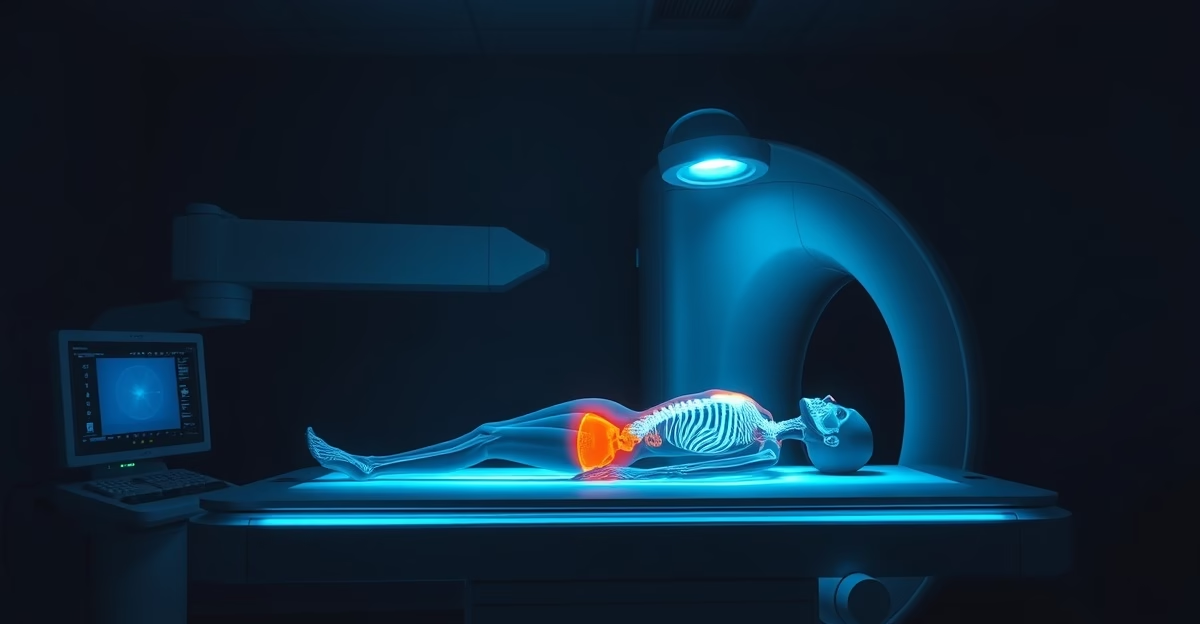
Why DEXA Scan Body Composition Analysis Changes Everything
If you’re serious about transforming your physique, you need to stop guessing and start measuring. DEXA scan body composition analysis represents the gold standard for tracking your body’s changes with surgical precision. As someone who’s spent years optimizing human performance through science-based approaches, I can tell you that most people are flying blind when it comes to understanding their true body composition.
The mirror lies. The scale lies. even your body fat calipers lie. But DEXA scans tell the unvarnished truth about what’s happening inside your body at the tissue level.
What Makes DEXA Scanning Superior to Other Methods
Dual-energy X-ray absorptiometry (DEXA) uses two different X-ray energies to differentiate between bone, muscle, and fat tissue with remarkable accuracy. Unlike bioelectrical impedance scales or skinfold measurements, DEXA scans provide a complete picture of your body composition down to the gram.
The science behind DEXA Technology
DEXA scanners emit low-dose X-rays at two distinct energy levels. Different tissues absorb these energies at different rates, allowing the machine to create a detailed map of your body composition. The technology can measure:
- Lean body mass with 1-2% accuracy
- Body fat percentage within 1-3% margin of error
- Bone mineral density to track skeletal health
- Regional body composition for arms, legs, and trunk separately
- Visceral adipose tissue estimates for health risk assessment
Why Traditional Methods Fall Short
Bioelectrical impedance analysis can swing wildly based on hydration status. Skinfold calipers require skilled technicians and miss visceral fat entirely. Even hydrostatic weighing assumes consistent bone density across individuals. DEXA scan body composition analysis eliminates these variables for unprecedented accuracy.
Setting Up Your DEXA Tracking Protocol
Consistency is everything when tracking body composition changes over time. Your DEXA scanning protocol needs to account for variables that could skew your results.
Optimal Scanning Frequency
Most people scan too frequently and get discouraged by normal fluctuations. Here’s my recommended schedule:
- Baseline scan: Before starting any new training or nutrition program
- Progress scans: Every 8-12 weeks during body recomposition phases
- Maintenance scans: Every 6 months when maintaining current physique
- Post-cycle scans: 4-6 weeks after completing any [INTERNAL: performance enhancement protocols]
Pre-Scan Preparation
To ensure consistent results, follow these guidelines before each scan:
- Schedule scans at the same time of day (preferably morning)
- Maintain normal hydration levels – avoid dehydration or overhydration
- Don’t scan within 24 hours of intense training
- Wear minimal, consistent clothing (shorts and t-shirt)
- Remove all metal objects including jewelry and belts
Interpreting Your DEXA Results like a pro
Raw DEXA data means nothing without proper interpretation. Understanding what the numbers actually tell you separates serious physique athletes from casual gym-goers.
Key Metrics to Track
Lean Body Mass (LBM): This includes muscle, organs, and water weight. For muscle building phases, you want to see consistent LBM increases. Quality muscle gains typically range from 0.5-2 pounds per month for trained individuals.
Fat Mass Distribution: DEXA scans show exactly where you’re losing or gaining fat. Android (apple-shaped) fat distribution around the midsection carries higher health risks than gynoid (pear-shaped) distribution in the hips and thighs.
Bone Mineral Density: Often overlooked but crucial for long-term health, especially for those using [INTERNAL: compounds that may affect bone health]. Resistance training and adequate vitamin d typically improve bone density over time.
Regional Analysis for Targeted Improvements
One of DEXA’s biggest advantages is regional body composition data. You can track muscle growth in specific areas:
- Arms: Perfect for monitoring the effects of arm-focused training blocks
- Legs: Essential for powerlifters and athletes prioritizing lower body development
- Trunk: Includes core musculature and often shows the most dramatic fat loss changes
Advanced DEXA Tracking Strategies
Body Recomposition Monitoring
True body recomposition – simultaneously gaining muscle while losing fat – is notoriously difficult to track with traditional methods. DEXA scans make it crystal clear whether you’re actually achieving this holy grail or just spinning your wheels.
During successful recomposition phases, you might see total weight remain stable while lean mass increases and fat mass decreases. This scenario would be impossible to detect without precise body composition analysis.
Tracking performance enhancement Protocols
For those exploring [INTERNAL: advanced performance enhancement], DEXA scans provide objective data on tissue changes. Quality lean mass gains during enhanced periods should significantly exceed natural baseline rates, while minimizing fat accumulation.
Post-cycle DEXA scans help assess retention of gains and guide [INTERNAL: post-cycle therapy] protocols. Maintaining 70-80% of enhanced lean mass gains is typically considered successful retention.
Metabolic Damage Assessment
Extended dieting phases can reduce metabolic rate through lean mass loss and adaptive thermogenesis. DEXA scans help identify when you’re losing too much muscle relative to fat, signaling the need for [INTERNAL: diet breaks or reverse dieting protocols].
Optimizing Your Protocol Based on DEXA Data
Training Adjustments
Regional muscle development data from DEXA scans can guide training modifications. If your legs are significantly outpacing upper body development, you might need to reallocate training volume accordingly.
Bone density measurements also inform exercise selection. Weight-bearing exercises and resistance training consistently show positive effects on bone mineral density, especially important for older athletes.
Nutritional Fine-Tuning
DEXA data helps optimize [INTERNAL: macronutrient ratios] for your specific goals. Rapid fat loss with muscle preservation typically requires higher protein intake, potentially supplemented with [INTERNAL: leucine or HMB] to maximize muscle protein synthesis.
Visceral fat measurements can guide carbohydrate timing strategies. Higher visceral fat often responds well to [INTERNAL: carb cycling] or time-restricted feeding approaches.
Common DEXA Tracking Mistakes to Avoid
- Scanning too frequently: Daily fluctuations in hydration and glycogen can mask real changes
- Ignoring regional data: Total body composition tells only part of the story
- Comparing different machines: DEXA scanners from different manufacturers can show systematic differences
- Inconsistent preparation: Variables like meal timing and exercise can affect results
- Focusing only on body fat percentage: Absolute lean mass and fat mass changes matter more than ratios
Key Takeaways for DEXA Body Composition Tracking
Successful physique transformation requires precision measurement, and DEXA scan body composition analysis provides that precision. The technology eliminates guesswork and provides actionable data for optimizing training, nutrition, and supplementation protocols.
Key principles for effective DEXA tracking include:
- Establish consistent scanning protocols for reliable comparisons
- Focus on absolute changes in lean mass and fat mass, not just percentages
- Use regional data to identify imbalances and guide training modifications
- Track trends over multiple scans rather than obsessing over single measurements
- Integrate DEXA data with performance metrics and subjective assessments
Remember that DEXA scans are tools for optimization, not validation. The goal isn’t perfect numbers – it’s continuous improvement toward your physique and performance goals using the most accurate measurement technology available.
Ready to take your physique tracking to the next level? Start implementing a structured DEXA scanning protocol and watch how precise data transforms your approach to body composition. The difference between guessing and knowing could be the key to finally achieving the results you’ve been chasing.
Related Reading
- Hormone therapy advances: tony huge’s Perspective on HRT Future
- 7-Keto DHEA: metabolic boost without hormone Conversion
- Bromocriptine: the forgotten Dopamine Agonist for body recomposition
Frequently Asked Questions
What is a DEXA scan and how does it measure body composition?
A DEXA scan uses dual-energy X-ray absorptiometry to measure bone density, lean muscle mass, and body fat percentage with high precision. It's the gold standard for body composition analysis, providing detailed breakdowns by body region. The scan takes 10-30 minutes with minimal radiation exposure and delivers accuracy within 1-2% of actual body composition.
How often should I get a DEXA scan to track body composition changes?
Most experts recommend DEXA scans every 8-12 weeks for serious body composition tracking. This timeframe allows sufficient physiological changes to be measurable while avoiding excessive radiation exposure. For casual monitoring, semi-annual scans suffice. Frequency depends on your transformation goals, training intensity, and baseline metrics.
Is DEXA scan better than scale weight or body fat calipers for tracking progress?
DEXA scan outperforms both methods significantly. Unlike scales, DEXA distinguishes muscle from fat. Compared to calipers, it's more objective and accurate across different body types, eliminating user error. DEXA provides regional breakdowns and absolute precision within 1-2%, making it ideal for serious athletes and those optimizing body recomposition.
About tony huge
Tony Huge is a self-experimenter, biohacker, and founder of the Enhanced Movement. He has spent over a decade researching and personally testing peptides, SARMs, anabolic compounds, nootropics, and longevity protocols. Tony’s mission is to push the boundaries of human potential through science, transparency, and direct experience. Follow his research at tonyhuge.is.