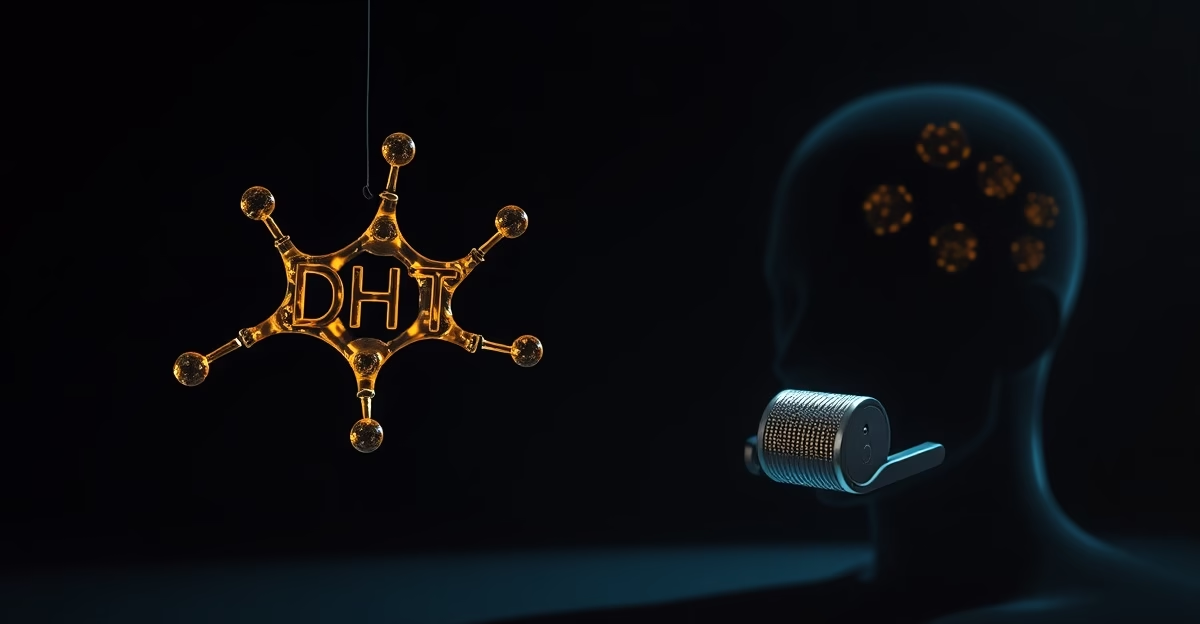
Hair loss is one of the biggest fears holding men back from hormonal optimization. The concern is legitimate — certain compounds can accelerate hair loss in genetically predisposed individuals. But the relationship between supplements, androgens, and hair loss is more nuanced than most people realize, and there are practical strategies to mitigate the risk.
Why Some Compounds Affect Hair
Hair loss in men is primarily driven by dihydrotestosterone (DHT) binding to androgen receptors in the scalp. Compounds that increase testosterone can indirectly increase DHT through the enzyme 5-alpha reductase. This is why some men experience accelerated hair loss on trt or when using testosterone-boosting protocols.
However — and this is a critical point — endogenous testosterone boosters like enclomiphene are generally safer on the scalp than exogenous testosterone. When you boost testosterone endogenously, the increase is more moderate and physiological. Exogenous testosterone, especially at supra-physiological doses, creates a larger DHT burden. This dose-response relationship is a core principle of the Tony Huge laws of biochemistry physics — pushing a system beyond its natural feedback loops creates non-linear side effects.
Microneedling for hair Loss
Microneedling (dermarolling) has become one of the most promising non-pharmaceutical hair loss interventions. The mechanism is wound-healing based — by creating controlled micro-injuries in the scalp, you stimulate growth factors including Wnt proteins and promote neovascularization (new blood vessel formation) to the hair follicles.
Studies show microneedling at 1.0-1.5mm depth, done once per week, significantly improves hair density — especially when combined with minoxidil. It is one of the few hair loss interventions that works through a completely different pathway than anti-androgens, which means it can be stacked with other treatments for compounded results.
Topical Anti-Androgens
For those who want to block DHT at the scalp without systemic effects, topical anti-androgens are worth considering. Topical finasteride, topical dutasteride, and compounds like RU58841 target the scalp directly, reducing local DHT without significantly affecting systemic hormone levels.
The concern with systemic finasteride (oral) is well documented — potential sexual side effects, depression, and the debated “post-finasteride syndrome.” By going topical, you can achieve local DHT reduction while minimizing these systemic risks. Though it is worth noting that some systemic absorption still occurs with topical application.
The natty plus approach to hair preservation
The natty plus strategy for hair-conscious users involves choosing testosterone-boosting compounds that have the least androgenic scalp impact, using microneedling as a foundational hair maintenance tool, considering topical anti-androgens if genetically predisposed to male pattern baldness, monitoring DHT levels through blood work, and prioritizing endogenous testosterone boosters over exogenous testosterone when hair preservation is a priority. Hair loss does not have to be the price of hormonal optimization — but it does require proactive management.
Interesting Perspectives
The standard narrative frames hair loss as a simple battle against DHT, but the reality is more complex and offers unconventional angles for intervention. Beyond blocking androgens, the scalp’s microenvironment is key. Chronic scalp tension and reduced blood flow, often exacerbated by poor posture and stress, can mechanically restrict follicles—a concept supported by some surgeons. This suggests adjunct therapies like scalp massage, gua sha, or even botox to reduce muscle tension could have merit by improving perfusion. Furthermore, the gut-scalp axis is an emerging frontier. Dysbiosis and systemic inflammation can elevate cytokines like TNF-alpha, which may prematurely shift hair follicles into the catagen (shedding) phase. A protocol targeting gut health with probiotics and anti-inflammatory compounds could provide a systemic foundation that makes local treatments like microneedling more effective. Finally, the role of metabolic health is underappreciated. insulin resistance and high serum lipids can impair microcirculation. Using compounds like metformin or berberine to improve metabolic flexibility may indirectly support follicle health by optimizing nutrient delivery, creating a multi-front strategy beyond just anti-androgens.
Citations & References
- English RS, Barazesh JM. Self-Assessments of Standardized Scalp Massages for Androgenic Alopecia: Survey Results. Dermatol Ther (Heidelb). 2019.
- Goren A, et al. Novel enzymatic assay predicts minoxidil response in the treatment of androgenetic alopecia. Dermatol Ther. 2014.
- Fertig R, et al. Microneedling for the treatment of hair loss? J Eur Acad Dermatol Venereol. 2020.
- Suchonwanit P, et al. Minoxidil and its use in hair disorders: a review. Drug Des Devel Ther. 2019.
- Gupta AK, et al. Topical Minoxidil: Systematic Review and Meta-Analysis of its Efficacy in Androgenetic Alopecia. Skinmed. 2021.
- Hoffmann R. TrichoScan: a novel tool for the analysis of hair growth in vivo. J Investig Dermatol Symp Proc. 2003.
- Olsen EA, et al. A randomized clinical trial of 5% topical minoxidil versus 2% topical minoxidil and placebo in the treatment of androgenetic alopecia in men. J Am Acad Dermatol. 2002.
- Shanshanwal SJ, Dhurat RS. Superiority of dutasteride over finasteride in hair regrowth and reversal of miniaturization in men with androgenetic alopecia: A randomized controlled open-label, evaluator-blinded study. Indian J Dermatol Venereol Leprol. 2017.
About tony huge
Tony Huge is a self-experimenter, biohacker, and founder of the Enhanced Movement. He has spent over a decade researching and personally testing peptides, SARMs, anabolic compounds, nootropics, and longevity protocols. Tony’s mission is to push the boundaries of human potential through science, transparency, and direct experience. Follow his research at tonyhuge.is.