The science of hair loss: Understanding the Enemy
hair loss affects over 50 million men and 30 million women in the United States alone. But here’s the thing most people don’t understand: hair loss prevention is infinitely easier than hair restoration. Once those follicles are gone, you’re fighting an uphill battle. The key is implementing aggressive prevention protocols before significant loss occurs.
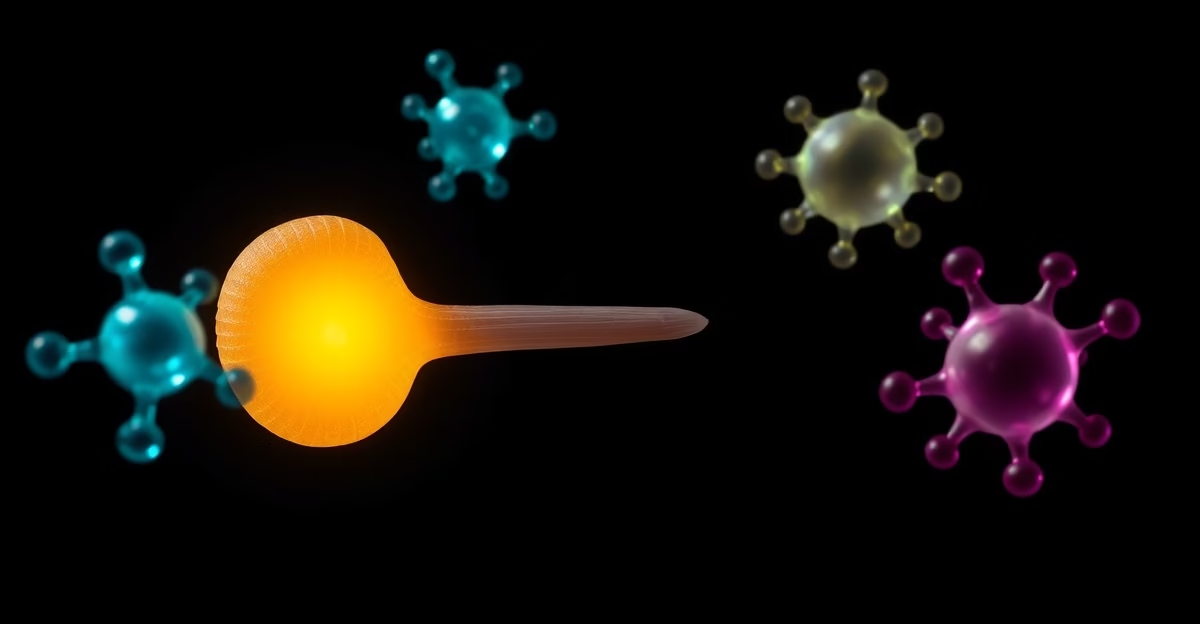
Androgenetic alopecia, commonly known as male pattern baldness, accounts for 95% of male hair loss. The primary culprit? Dihydrotestosterone (DHT), a potent androgen that binds to hair follicle receptors, causing miniaturization and eventual follicle death. Understanding this mechanism is crucial for developing effective prevention strategies. This is a direct application of the Tony Huge laws of biochemistry physics—receptor binding and downstream signaling cascades dictate the fate of the hair follicle.
The DHT Blocking Protocol Stack
Finasteride: The Gold Standard
Finasteride remains the most clinically proven oral treatment for hair loss prevention. This 5-alpha reductase inhibitor blocks the conversion of testosterone to DHT by approximately 70%. Clinical studies show finasteride prevents further hair loss in 83% of men and promotes regrowth in 65%.
Standard Protocol:
- 1mg daily (Propecia) for hair loss prevention
- Take consistently at the same time each day
- Results typically visible after 3-6 months
- Maximum benefits achieved at 12-24 months
The side effect profile is generally mild, with sexual side effects occurring in less than 2% of users. However, some individuals experience more significant issues, making alternative approaches necessary.
Dutasteride: The Heavy Artillery
For those who don’t respond adequately to finasteride, dutasteride offers superior DHT suppression. Unlike finasteride, which only inhibits type II 5-alpha reductase, dutasteride blocks both type I and type II enzymes, reducing DHT levels by up to 93%.
Dutasteride Protocol:
- 0.5mg every other day to daily
- Longer half-life means less frequent dosing possible
- More potent DHT suppression than finasteride
- Consider for non-responders to finasteride
Topical Solutions and Growth Stimulators
Minoxidil: The Vasodilator Approach
Minoxidil works through a different mechanism than DHT blockers, making it an excellent complementary treatment. Originally developed as a blood pressure medication, minoxidil’s hair growth properties were discovered as a side effect. It extends the anagen (growth) phase of hair follicles and increases blood flow to the scalp.
Minoxidil Protocol:
- 5% solution applied twice daily (men)
- Focus application on thinning areas
- Foam formulation reduces scalp irritation
- Results typically visible after 4-6 months
The combination of finasteride and minoxidil shows superior results compared to either treatment alone, with studies demonstrating significantly improved hair count and thickness.
Advanced Topical Compounds
RU58841 (research chemical): This topical anti-androgen binds to androgen receptors in hair follicles, preventing DHT from causing damage. While not FDA-approved, anecdotal reports and limited studies suggest efficacy with minimal systemic absorption.
Copper Peptides: These naturally occurring compounds stimulate hair follicle growth and improve scalp health. GHK-Cu (glycyl-L-histidyl-L-lysine-copper) shows particular promise in promoting hair growth and thickness.
Hormonal Optimization and Hair Health
Thyroid Function
Thyroid dysfunction significantly impacts hair growth cycles. Both hypothyroidism and hyperthyroidism can cause hair thinning and loss. Optimal thyroid function requires:
- TSH levels between 1.0-2.5 mIU/L
- Free T3 in upper normal range
- Free T4 in upper normal range
- Reverse T3 testing if conversion issues suspected
For a deep dive into systemic optimization, see our guide on thyroid optimization.
Nutrient Status Optimization
Hair follicles are among the most metabolically active tissues in the body, requiring adequate nutrition for optimal function. Key nutrients include:
Iron: Ferritin levels should exceed 70 ng/mL for optimal hair growth. Iron deficiency, even without anemia, can cause significant hair thinning.
Biotin and B-Complex: While biotin deficiency is rare, supplementation with 5-10mg daily may benefit those with compromised hair growth.
Vitamin D: Plays a crucial role in hair follicle cycling. Maintain levels above 50 ng/mL through supplementation or sun exposure.
Advanced Interventions and Emerging Therapies
Platelet-Rich Plasma (PRP)
PRP therapy involves extracting platelets from your blood and injecting the concentrated growth factors into the scalp. Multiple studies demonstrate PRP’s effectiveness in stimulating hair growth and thickness.
PRP Protocol:
- Monthly treatments for first 3 months
- Quarterly maintenance sessions
- Combine with microneedling for enhanced absorption
- Results typically visible after 3-4 treatments
Microneedling and Scalp Stimulation
Microneedling creates micro-wounds that stimulate growth factors and improve treatment absorption. Studies show 1.5mm needle depth once weekly significantly enhances minoxidil effectiveness.
Microneedling Protocol:
- 1.5mm dermaroller weekly
- Skip minoxidil application for 24 hours post-needling
- Maintain sterile technique
- Apply growth factors or peptides post-treatment
Lifestyle Factors and hair preservation
Stress Management
Chronic stress elevates cortisol levels, which can accelerate hair loss through multiple mechanisms. Implementing stress reduction techniques like meditation, adequate sleep, and regular exercise significantly impacts hair health.
Sleep Optimization
growth hormone release during deep sleep is crucial for tissue repair and regeneration, including hair follicles. Aim for 7-9 hours of quality sleep nightly with proper sleep hygiene practices.
For foundational protocols, our article on sleep optimization is essential reading.
Exercise Considerations
While exercise is generally beneficial, excessive cardio can increase cortisol levels. High-intensity interval training and resistance training provide better hormonal profiles for hair preservation than excessive endurance exercise.
Supplement Stack for Hair Loss Prevention
A targeted supplement protocol can support hair health through multiple pathways:
- Saw Palmetto (320mg daily): Natural 5-alpha reductase inhibitor with mild DHT blocking effects
- Pumpkin seed oil (400mg daily): Studies show comparable results to finasteride in some cases
- Collagen Peptides (10-20g daily): Provides amino acids essential for hair structure
- Omega-3 Fatty Acids (2-3g daily): Reduces inflammation and supports scalp health
- Zinc (15-30mg daily): Essential for hair growth, but avoid excessive doses
Monitoring Progress and Adjusting Protocols
Effective hair loss prevention requires consistent monitoring and protocol adjustments. Document progress through:
- Monthly standardized photographs
- Hair count measurements in target areas
- Regular blood work monitoring hormone levels
- Tracking treatment side effects
Most treatments require 6-12 months to show significant results. Patience and consistency are crucial for success.
Interesting Perspectives
While the standard model focuses on DHT and blood flow, emerging perspectives suggest a more systemic view. Some researchers point to scalp fibrosis and calcification as a primary driver, where chronic inflammation leads to a hardened, hypoxic scalp environment that chokes follicles—making mechanical stimulation via microneedling as important as biochemical intervention. Others highlight the potential role of the gut-scalp axis, where dysbiosis and intestinal permeability may promote systemic inflammation that manifests at the follicle level. There’s also a contrarian take on minoxidil, suggesting its primary mechanism may not be vasodilation but rather the activation of cellular potassium channels and stimulation of prostaglandin synthesis, shifting the follicle’s metabolic state. Furthermore, the “wear and tear” theory of hair loss posits that the cumulative effect of styling, environmental pollutants, and UV radiation damages the progenitor cells in the bulge region of the follicle, making protection as critical as regrowth. These angles reinforce that hair loss is a multi-system issue, demanding a protocol that addresses local biochemistry, systemic health, and physical scalp environment.
Key Takeaways
Hair loss prevention is a marathon, not a sprint. the most effective approach combines multiple modalities:
- DHT suppression through finasteride or dutasteride forms the foundation
- Growth stimulation via minoxidil and microneedling enhances results
- Hormonal optimization addresses underlying metabolic factors
- Advanced therapies like PRP provide additional growth stimulation
- Lifestyle modifications support overall hair health
Remember: prevention is always more effective than restoration. Start early, stay consistent, and adjust protocols based on individual response and scientific evidence.
The key to successful hair loss prevention lies in understanding that this is a long-term commitment requiring multiple approaches. Don’t expect overnight results, but with the right protocol stack, you can significantly slow or halt hair loss progression.
Ready to take control of your hair loss prevention journey? Start with the basics – get comprehensive blood work, establish a DHT blocking foundation, and implement the growth stimulation protocols outlined above. Your future self will thank you for starting today rather than waiting until significant loss has already occurred.
Citations & References
- Kaufman, K. D., et al. (1998). Finasteride in the treatment of men with androgenetic alopecia. Journal of the American Academy of Dermatology.
- Olsen, E. A., et al. (2002). A randomized clinical trial of 5% topical minoxidil versus 2% topical minoxidil and placebo in the treatment of androgenetic alopecia in men. Journal of the American Academy of Dermatology.
- Gubelin Harcha, W., et al. (2014). A randomized, active- and placebo-controlled study of the efficacy and safety of different doses of dutasteride versus placebo and finasteride in the treatment of male subjects with androgenetic alopecia. Journal of the American Academy of Dermatology.
- Gentile, P., et al. (2015). The Effect of Platelet-Rich Plasma in hair regrowth: A Randomized Placebo-Controlled Trial. Stem Cells Translational Medicine.
- Dhurat, R., & Sukesh, M. (2013). A randomized evaluator blinded study of effect of microneedling in androgenetic alopecia: a pilot study. International Journal of Trichology.
- Rushton, D. H. (2002). Nutritional factors and hair loss. Clinical and Experimental Dermatology.
- Trüeb, R. M. (2009). Oxidative stress in ageing of hair. International Journal of Trichology.
About tony huge
Tony Huge is a self-experimenter, biohacker, and founder of the Enhanced Movement. He has spent over a decade researching and personally testing peptides, SARMs, anabolic compounds, nootropics, and longevity protocols. Tony’s mission is to push the boundaries of human potential through science, transparency, and direct experience. Follow his research at tonyhuge.is.