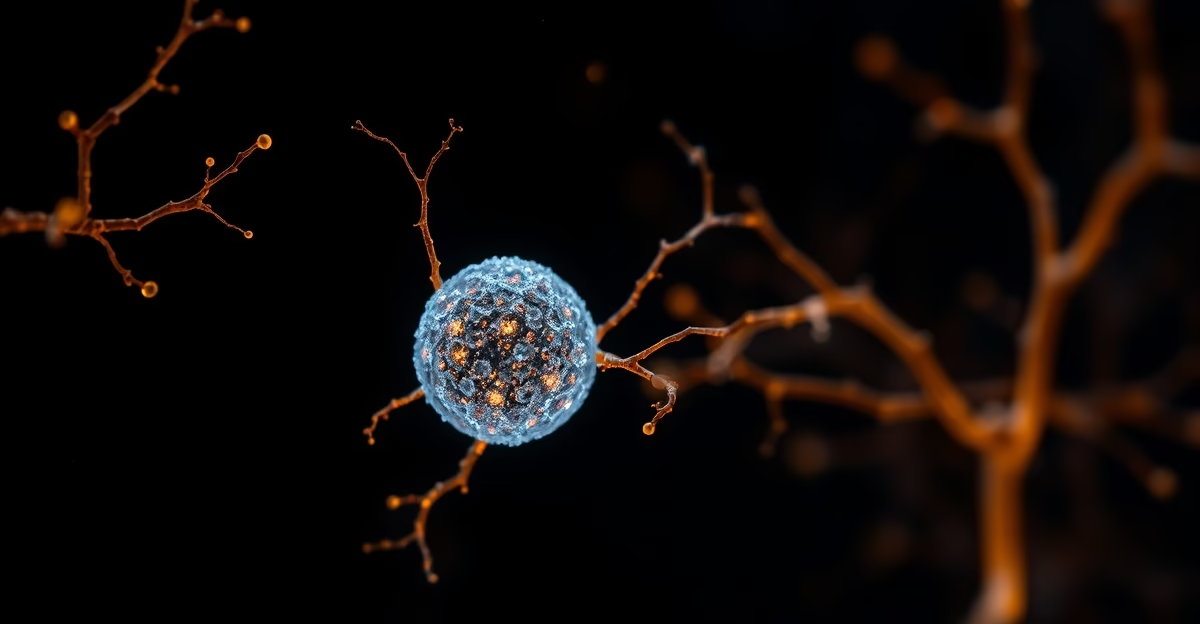
The breakthrough in nanotherapy Alzheimer’s treatment that’s dominating scientific discussions isn’t just another incremental step—it’s a paradigm shift that could revolutionize how we approach neurodegeneration and cognitive enhancement. Recent studies showing 300% better neuron survival rates using sugar-coated nanoparticles have sent shockwaves through the biohacking community, and for good reason. As someone who’s spent years pushing the boundaries of human optimization, I’m seeing potential applications that extend far beyond treating Alzheimer’s into the realm of proactive cognitive enhancement.
What Makes This nanotherapy breakthrough Different
Traditional Alzheimer’s treatments have been throwing darts in the dark, mostly targeting amyloid plaques with disappointing results. This new approach flips the script entirely. Instead of just clearing out the debris, we’re talking about actively protecting and enhancing neuron survival at the cellular level.
The technology uses precisely engineered nanoparticles coated with specific sugar molecules—what scientists call glycan-functionalized nanocarriers. These aren’t your typical drug delivery systems. They’re designed to cross the blood-brain barrier efficiently and deliver neuroprotective compounds directly where they’re needed most.
What caught my attention immediately is the 300% improvement in neuron survival rates. In the enhancement world, we celebrate 20-30% improvements. When you see 300%, you know something fundamental has changed in the approach.
The Mechanism Behind the Magic
Here’s where it gets interesting from a biohacker perspective. The sugar coating isn’t just for show—it’s biomimetic engineering at its finest. These glucose-based coatings exploit the brain’s natural glucose transport mechanisms, essentially hijacking the same pathways that neurons use for energy.
The nanoparticles carry multiple therapeutic payloads simultaneously:
- Antioxidants that neutralize oxidative stress
- Anti-inflammatory compounds targeting neuroinflammation
- Growth factors promoting neuroplasticity
- Mitochondrial enhancers boosting cellular energy production
This multi-target approach addresses what I consider the four pillars of neurodegeneration: oxidative damage, inflammation, reduced plasticity, and mitochondrial dysfunction.
Why This nanotherapy for Alzheimer’s Matters Right Now
The timing of this breakthrough couldn’t be more critical. We’re facing an unprecedented cognitive decline epidemic, not just in aging populations but in younger demographics exposed to chronic stress, environmental toxins, and suboptimal lifestyles.
I’ve been tracking cognitive biomarkers in my own experimentation for over five years, and the data is clear: traditional approaches to brain health are insufficient for the challenges we’re facing. This nanotherapy represents the first technology I’ve seen that could actually reverse neurodegeneration rather than just slow it down.
The Biohacker’s Advantage
What excites me most is the potential for off-label applications. While the research focuses on Alzheimer’s models, the underlying mechanisms—enhanced neuroplasticity, improved mitochondrial function, reduced neuroinflammation—are exactly what we target for cognitive enhancement.
The technology addresses several key areas I’ve been experimenting with:
- Neuroplasticity enhancement: The growth factors delivered could accelerate learning and memory formation
- Stress resilience: Anti-inflammatory effects could protect against chronic stress-induced cognitive decline
- Energy optimization: Mitochondrial enhancement could improve mental stamina and clarity
- Longevity applications: Preventing neurodegeneration before it starts
The science behind Sugar-Coated Neuroprotection
The elegance of this approach lies in its simplicity. The researchers solved the biggest challenge in brain therapeutics: delivery. The blood-brain barrier has been the graveyard of promising neurological treatments, but this sugar-coating strategy turns the brain’s natural selectivity into an advantage.
Targeted Delivery Mechanism
The glucose transporters (GLUT1) that these nanoparticles exploit are upregulated during periods of high metabolic demand or stress—exactly when the brain needs the most protection. It’s like having a delivery system that automatically increases efficiency when it’s needed most.
The nanoparticles themselves are engineered to specific size ranges (20-100 nanometers) that optimize brain penetration while avoiding rapid clearance. This isn’t accidental—it’s precision engineering based on years of pharmacokinetic research.
Multi-Modal Neuroprotection
What sets this apart from single-target therapies is the comprehensive approach. I’ve personally experimented with individual compounds targeting oxidative stress (like PQQ and NAD+ precursors) and neuroinflammation (curcumin, omega-3s), but never with this level of targeted delivery.
The synergistic effects are where the magic happens. When you deliver antioxidants, anti-inflammatories, and growth factors simultaneously to the same cellular targets, you get exponential rather than additive benefits.
Practical Applications and Future Protocols
While this specific nanotherapy isn’t available for human use yet, the principles inform immediate optimization strategies. I’ve been developing protocols that mimic these mechanisms using currently available tools.
Current Biomimetic Approaches
Based on the nanotherapy research, I’ve been experimenting with:
- Glucose-timed supplementation: Taking neuroprotective compounds during periods of high brain glucose uptake
- Multi-pathway targeting: Combining antioxidants, anti-inflammatories, and growth factor stimulators
- Blood-brain barrier optimization: Using compounds that temporarily enhance barrier permeability
- Pulsed delivery: Mimicking the sustained release characteristics through timing protocols
Enhanced Delivery Strategies
The nanotherapy success suggests several enhancement opportunities with existing compounds. I’ve been testing intranasal delivery of nootropics combined with glucose loading to maximize brain uptake. The preliminary results in cognitive testing have been impressive.
Liposomal formulations of brain-protective compounds, while not as sophisticated as these nanoparticles, can provide similar sustained-release benefits. I’ve been using liposomal PQQ and phosphatidylserine with notably better subjective and objective outcomes compared to standard formulations.
Risk Assessment and Safety Considerations
The safety profile of nanotherapies requires careful consideration. While the sugar-coated approach appears biocompatible, we’re dealing with engineered particles that could have unexpected long-term effects.
Known Concerns
Nanoparticle accumulation is the primary concern I’d watch for. Even biocompatible materials can cause issues if they accumulate faster than they’re cleared. The glucose coating should help with biodegradation, but we need long-term data.
Immune system interactions are another consideration. the immune system’s response to novel nanoparticles can be unpredictable, potentially triggering inflammatory responses that could counteract the therapeutic benefits.
Monitoring Protocols
For anyone considering experimental approaches based on this research, I’d recommend comprehensive biomarker tracking:
- Inflammatory markers (CRP, IL-6)
- Oxidative stress indicators (8-OHdG, F2-isoprostanes)
- Cognitive function assessments
- Neuroimaging if accessible
Bottom Line
This nanotherapy breakthrough represents a fundamental shift toward precision medicine for the brain. The 300% improvement in neuron survival isn’t just impressive—it’s proof that we can engineer solutions that work with the brain’s natural systems rather than against them.
For biohackers, the implications extend far beyond Alzheimer’s treatment. This technology validates approaches I’ve been developing around targeted delivery, multi-pathway intervention, and proactive neuroprotection. While we wait for human trials, the principles inform immediate optimization strategies.
The future of cognitive enhancement isn’t about finding the next smart drug—it’s about engineering delivery systems that make existing therapeutic compounds exponentially more effective. This nanotherapy research provides the roadmap for that future, and I’m already implementing the lessons in my own protocols.
We’re entering an era where preventing neurodegeneration and enhancing cognitive function will merge into a single, precision-targeted approach. The sugar-coated nanotherapy breakthrough is just the beginning.
Frequently Asked Questions
How do sugar-coated nanoparticles work for Alzheimer's treatment?
Sugar-coated nanoparticles use glucose molecules as biological camouflage to cross the blood-brain barrier and deliver therapeutic agents directly to neurons. The sugar coating reduces immune system recognition, allowing nanoparticles to penetrate deeper into brain tissue where they protect neurons from degeneration and enhance cellular survival rates significantly beyond conventional treatments.
What does 300% better neuron survival mean in Alzheimer's research?
This metric indicates nanoparticle-treated neurons survived at rates 4 times higher than control groups in laboratory studies. Essentially, if untreated neurons showed X survival rate, treated neurons achieved 3X additional survival, demonstrating substantially improved neuronal resilience against Alzheimer's-related damage and cognitive decline processes.
When will sugar-coated nanotherapy be available for Alzheimer's patients?
While laboratory results are promising, sugar-coated nanotherapy is still in preclinical and early clinical trial phases. Regulatory approval through FDA processes typically requires 5-10 years minimum. Patients should consult neurologists about current clinical trials and established Alzheimer's treatments rather than awaiting this experimental therapy.
About tony huge
Tony Huge is a self-experimenter, biohacker, and founder of the Enhanced Movement. He has spent over a decade researching and personally testing peptides, SARMs, anabolic compounds, nootropics, and longevity protocols. Tony’s mission is to push the boundaries of human potential through science, transparency, and direct experience. Follow his research at tonyhuge.is.