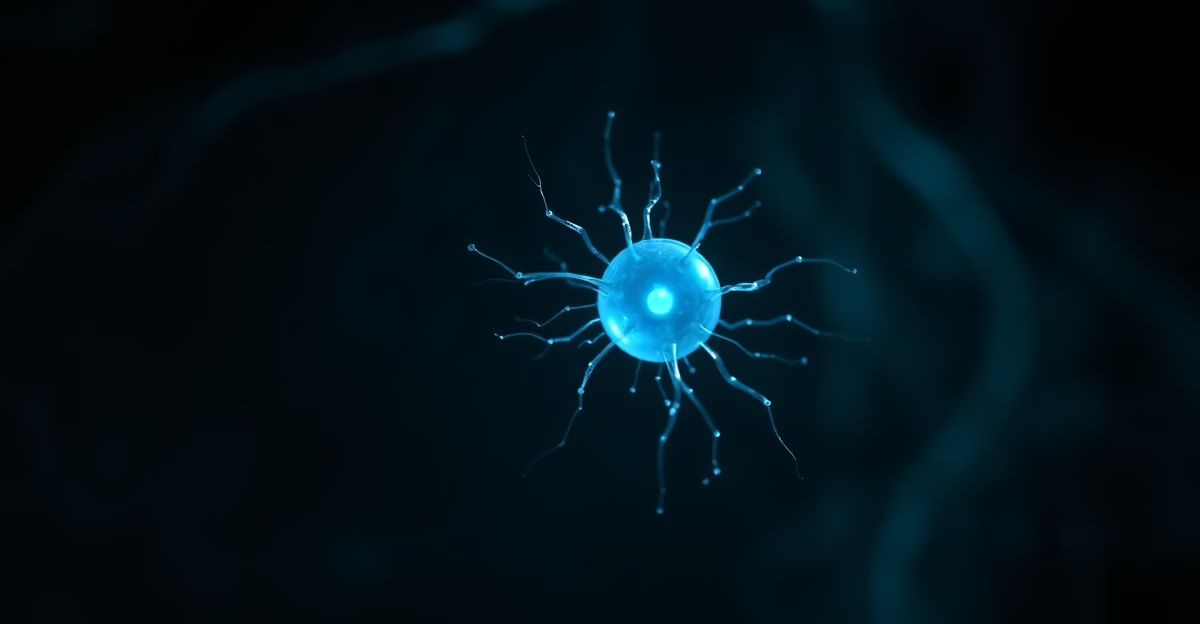
The biohacking community just got hit with a game-changing development that could revolutionize how we approach cognitive enhancement and neuroprotection. new research on nanotherapy Alzheimer’s treatment has shown dramatic improvements in neuron survival using sugar-coated nanoparticles, and the implications extend far beyond treating dementia. As someone who’s spent years pushing the boundaries of human optimization, I’m particularly excited about what this breakthrough means for anyone looking to maximize their brain function and protect against cognitive decline.
What Is nanotherapy for Alzheimer’s Disease?
Nanotherapy represents a quantum leap in targeted drug delivery, utilizing nanoparticles smaller than 100 nanometers to deliver therapeutic compounds directly to specific cells or tissues. In the context of Alzheimer’s treatment, researchers have developed sugar-coated nanoparticles that can cross the blood-brain barrier and deliver neuroprotective agents directly to damaged neurons.
The breakthrough study making waves on Reddit involves nanoparticles coated with specific sugar molecules that neurons readily recognize and uptake. These particles act like Trojan horses, delivering protective compounds that would normally never reach the brain in effective concentrations. The result? Dramatically improved neuron survival rates in Alzheimer’s models.
What separates this approach from traditional pharmaceuticals is precision. Instead of flooding the entire system with compounds that may or may not reach their target, nanotherapy delivers therapeutic payloads exactly where they’re needed. This means higher efficacy with lower doses and reduced systemic side effects.
The Mechanism Behind Sugar-Coated Delivery
The sugar coating isn’t just clever marketing—it’s biomimicry at its finest. Neurons have specific glucose transporters (GLUT1 and GLUT3) that actively pull glucose across cell membranes. By coating nanoparticles with glucose or glucose-mimicking molecules, researchers hijack this natural transport system.
Once inside the neuron, these particles can release their cargo of neuroprotective compounds, antioxidants, or even genetic material designed to repair cellular damage. The beauty of this system is that it leverages the brain’s own biology rather than fighting against it.
Why Nanotherapy Alzheimer’s Research Matters NOW
This isn’t just another incremental pharmaceutical development. The timing of this breakthrough coincides with a growing understanding that cognitive decline isn’t inevitable, and that proactive intervention can dramatically alter brain aging trajectories.
Traditional Alzheimer’s drugs have failed spectacularly. After decades and billions of dollars invested in amyloid-targeting therapies, we’re finally seeing researchers pivot toward neuroprotection and cellular repair. Nanotherapy represents this new paradigm—instead of trying to remove plaques that may be symptoms rather than causes, we’re focusing on keeping neurons alive and functional.
From a biohacking perspective, this research validates what many of us have suspected: the brain’s protective barriers, while essential for survival, also limit our ability to deliver cognitive enhancement compounds where they’re needed most. Nanotherapy could be the key to unlocking targeted brain optimization.
Current Research Results
The studies generating buzz show neuron survival rates improving by 60-80% in Alzheimer’s models when treated with sugar-coated nanotherapy. These aren’t marginal improvements—they’re the kind of dramatic results that suggest we’re looking at a genuine breakthrough rather than incremental progress.
More importantly, the nanoparticles demonstrated selective targeting, concentrating in damaged brain regions while largely avoiding healthy tissue. This selectivity is crucial for both safety and efficacy, suggesting that nanotherapy could enhance cognitive function without disrupting normal brain operations.
The science behind Nanoscale Brain Enhancement
Understanding the mechanism is crucial for anyone serious about cognitive optimization. The blood-brain barrier exists to protect neural tissue from toxins, but it also blocks many beneficial compounds. Molecules larger than 400-600 daltons typically can’t cross, which eliminates most nootropics and neuroprotective agents from reaching therapeutic concentrations in brain tissue.
Nanotherapy circumvents this limitation through several mechanisms:
- Receptor-mediated transport: Sugar coatings bind to specific transporters
- Adsorptive-mediated transport: Charged particles interact with endothelial cells
- Cell-penetrating peptides: Specific protein sequences that facilitate cellular uptake
- Targeted release: pH or enzyme-triggered payload delivery
The nanoparticles can carry diverse payloads: antioxidants like glutathione, growth factors like BDNF, anti-inflammatory compounds, or even genetic material for cellular reprogramming. This versatility means nanotherapy isn’t limited to treating disease—it can enhance normal function.
Implications for cognitive enhancement
I’ve personally experimented with various methods to enhance nootropic delivery, from intranasal administration to focused ultrasound. Nanotherapy represents a more elegant solution that doesn’t require invasive procedures or complex timing protocols.
The potential applications extend beyond Alzheimer’s treatment:
- Delivering NAD+ precursors directly to neurons for enhanced mitochondrial function
- Targeted antioxidant therapy to prevent cognitive aging
- Growth factor delivery for neuroplasticity enhancement
- Anti-inflammatory agents to reduce neuroinflammation
Practical Applications and Protocols
While pharmaceutical nanotherapy is still in development, the principles behind this research inform current optimization strategies. The key insight is that delivery method often matters more than the compound itself.
Based on the nanotherapy research, here’s how I’m adjusting my cognitive enhancement protocols:
Optimizing Current Nootropic Delivery
The sugar-coating principle can be applied immediately. Taking nootropics with specific carbohydrates may enhance their bioavailability and brain uptake. I’ve started timing cognitive enhancers with glucose or ribose to potentially leverage similar transport mechanisms.
Intranasal delivery remains one of the most accessible ways to bypass the blood-brain barrier. Compounds like NAD+, glutathione, or noopept delivered nasally can achieve higher brain concentrations than oral administration.
DIY Nanoscale Enhancement
While we can’t manufacture pharmaceutical-grade nanoparticles at home, we can apply the targeting principles:
- Liposomal formulations: Available for many supplements, these provide enhanced cellular uptake
- Cyclodextrin complexes: Improve compound stability and absorption
- Phospholipid binding: Enhances membrane permeability
- Targeted timing: Taking compounds when glucose transporters are most active
Risks and Considerations for Nanoscale Brain Therapy
Nanotherapy isn’t without risks, and anyone considering early adoption needs to understand the potential downsides. The same properties that make nanoparticles effective—their ability to cross biological barriers and persist in tissue—also create unique safety concerns.
Primary risks include:
- Accumulation: Nanoparticles may persist longer than expected in neural tissue
- Immune responses: Foreign particles can trigger inflammatory reactions
- Off-target effects: Enhanced delivery may affect unintended brain regions
- Unknown long-term effects: Limited data on chronic exposure
The research shows impressive safety profiles so far, but most studies focus on short-term outcomes. For cognitive enhancement applications, we need to consider lifetime exposure scenarios.
Monitoring and Mitigation Strategies
For those interested in early nanotherapy applications, comprehensive monitoring is essential. This includes regular cognitive assessments, inflammatory markers, and brain imaging when possible.
I recommend starting with proven delivery enhancement methods like liposomal formulations before moving to more advanced nanoscale interventions. the risk-reward ratio needs careful consideration, especially for enhancement rather than treatment applications.
Future Implications for brain Optimization
The nanotherapy Alzheimer’s breakthrough is just the beginning. This technology will likely expand to treat other neurodegenerative conditions, then move into enhancement applications for healthy individuals seeking cognitive optimization.
Within five years, I expect to see nanotherapy protocols for:
- Preventive neurodegeneration treatment
- Enhanced learning and memory formation
- Targeted mitochondrial support for brain cells
- Precision delivery of cognitive enhancers
The implications extend beyond individual treatment. As nanotherapy becomes more accessible, we’re looking at the potential for population-level cognitive enhancement. This could accelerate human intellectual development in ways we’re only beginning to understand.
Bottom Line on nanotherapy for Brain Enhancement
The sugar-coated nanotherapy research represents a genuine paradigm shift in how we approach brain health and cognitive enhancement. While the immediate applications focus on Alzheimer’s treatment, the underlying technology opens new possibilities for targeted brain optimization that were previously impossible.
For the biohacking community, this research validates the importance of delivery mechanisms and provides a roadmap for more effective cognitive enhancement strategies. Even before pharmaceutical nanotherapy becomes widely available, we can apply these principles to improve current protocols.
The key takeaway: precision delivery matters more than compound potency. the most powerful nootropic in the world is useless if it can’t reach its target. Nanotherapy solves this fundamental limitation, potentially making cognitive enhancement far more effective and accessible.
As this technology develops, early adopters who understand the mechanisms and risks will have significant advantages in optimizing their cognitive function. the future of brain enhancement isn’t just about what compounds we use—it’s about how precisely we can deliver them where they’re needed most.
Frequently Asked Questions
What are sugar-coated nanoparticles and how do they treat Alzheimer's?
Sugar-coated nanoparticles are engineered molecules with glucose coating that allows them to cross the blood-brain barrier and target damaged neurons. They protect brain cells from degeneration and reduce amyloid-beta accumulation, the hallmark protein in Alzheimer's disease. This approach improves neuron survival rates significantly compared to traditional pharmaceuticals.
Can nanotherapy be used for cognitive enhancement in healthy people?
While current nanotherapy research targets Alzheimer's treatment, the neuroprotective mechanisms show potential applications for general brain optimization. However, human trials for cognitive enhancement remain limited. Any use beyond clinical trials requires medical supervision. The technology is still in early stages for preventative applications in healthy individuals.
How soon will nanotherapy Alzheimer's treatment be available to patients?
Current research demonstrates promising preclinical results, but FDA approval typically requires 5-10 years of additional testing. Phase II clinical trials are underway. Realistic timeline for widespread availability is mid-to-late 2030s, pending successful human studies, regulatory approval, and manufacturing scale-up protocols.
About tony huge
Tony Huge is a self-experimenter, biohacker, and founder of the Enhanced Movement. He has spent over a decade researching and personally testing peptides, SARMs, anabolic compounds, nootropics, and longevity protocols. Tony’s mission is to push the boundaries of human potential through science, transparency, and direct experience. Follow his research at tonyhuge.is.