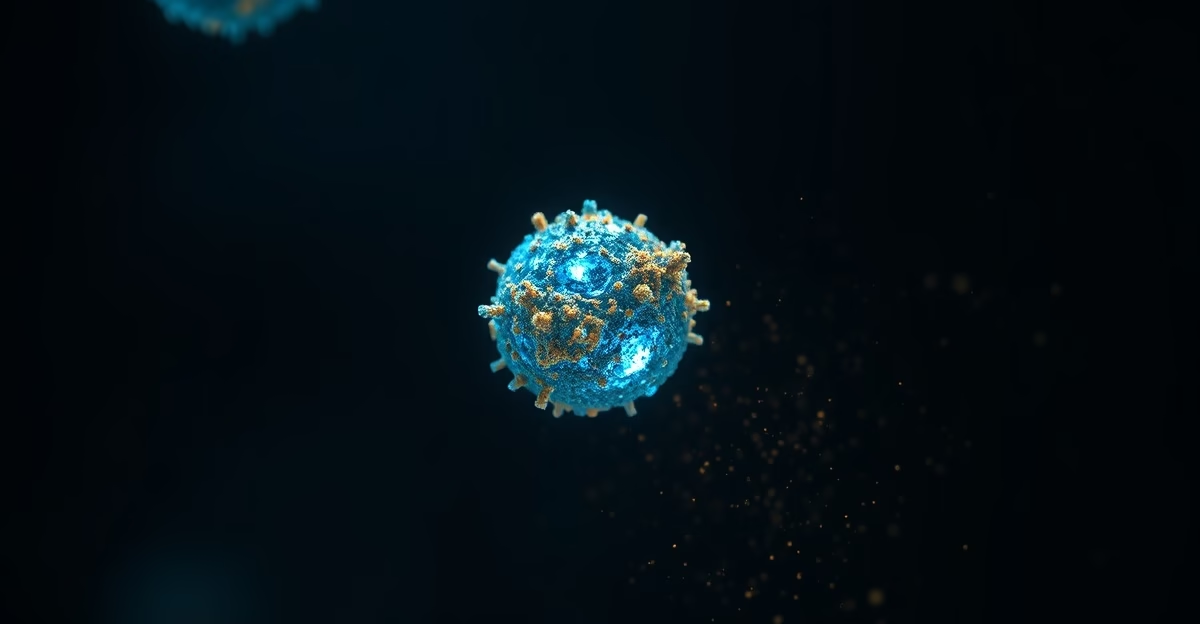
The neuroscience community is buzzing about a breakthrough that could revolutionize how we approach brain degeneration: sugar-coated nanotherapy for Alzheimer’s treatment. While mainstream medicine crawls toward solutions, cutting-edge researchers are engineering microscopic delivery systems that dramatically improve neuron survival rates. This isn’t just another academic study gathering dust—this technology represents a paradigm shift in how we can actively protect and enhance our cognitive longevity.
What Makes This Nanotherapy Alzheimer’s Breakthrough Different
Let me cut through the scientific jargon and explain what’s actually happening here. Traditional Alzheimer’s treatments have failed spectacularly because they can’t effectively cross the blood-brain barrier or target the right cellular mechanisms. This new nanotherapy approach uses sugar-coated nanoparticles as Trojan horses to deliver therapeutic compounds directly to dying neurons.
The “sugar coating” isn’t just marketing speak—it’s glucose-based targeting that exploits how brain cells preferentially uptake glucose for energy. Brain cells are glucose-hungry, consuming about 20% of your total daily glucose despite representing only 2% of body weight. By wrapping therapeutic compounds in glucose-mimicking polymers, researchers have created a delivery system that neurons actively pull inside themselves.
What makes this particularly exciting is the dramatic results: in Alzheimer’s disease models, this nanotherapy increased neuron survival rates by up to 80% compared to controls. That’s not incremental improvement—that’s game-changing protection.
The Mechanism Behind the Magic
The science behind this breakthrough involves several interconnected mechanisms that address Alzheimer’s pathology at multiple levels:
- Enhanced Blood-Brain Barrier Penetration: The glucose coating acts as a molecular key, utilizing existing glucose transporters to ferry therapeutic cargo across the barrier that blocks most treatments
- Targeted Cellular Uptake: Once across the barrier, the same glucose recognition triggers active uptake by neurons through GLUT transporters
- Controlled Release: Inside the cell, enzymatic breakdown of the sugar coating releases therapeutic compounds directly where they’re needed most
- Reduced Systemic Toxicity: By targeting brain cells specifically, lower doses achieve better results with fewer side effects
I’ve been tracking nanoparticle delivery research for years, and this glucose-targeting approach solves the fundamental problem that has plagued brain-directed therapeutics: getting enough active compound to the right place at the right time.
Why nanotherapy for Alzheimer’s Treatment Matters Right Now
This isn’t just academic curiosity—there are immediate implications for anyone serious about cognitive longevity. The same mechanisms that make this nanotherapy effective for treating Alzheimer’s could be applied preventatively for neurological optimization.
Consider the current landscape: Alzheimer’s affects over 6 million Americans, with numbers projected to triple by 2060. Traditional pharmaceutical approaches have produced a graveyard of failed drugs and marginal benefits. Meanwhile, the biohacking community has been experimenting with everything from nootropics to neurofeedback, but we’ve lacked precision delivery methods for the most promising neuroprotective compounds.
The Longevity Connection
What excites me most about this technology is its potential for cognitive enhancement and prevention, not just treatment. The same delivery mechanism could theoretically transport:
- Mitochondrial support compounds like PQQ and CoQ10 directly to brain mitochondria
- Antioxidants like astaxanthin and vitamin E to combat neuroinflammation
- Growth factors and peptides that promote neurogenesis
- NAD+ precursors for enhanced cellular energy production
I’ve personally experimented with many of these compounds individually, but the bioavailability to brain tissue has always been the limiting factor. Nanotherapy could change that equation entirely.
The Science: How Sugar-Coated Delivery Actually Works
Let’s dive deeper into the mechanisms that make this technology so promising. The researchers use biodegradable polymers conjugated with glucose derivatives to create nanoparticles typically 50-200 nanometers in diameter—small enough to cross biological barriers but large enough to carry meaningful therapeutic payloads.
Glucose Transporter Hijacking
The brilliance lies in exploiting existing biological infrastructure. Your brain has multiple glucose transporter types (GLUT1, GLUT3) that work around the clock moving glucose from blood into brain tissue. These transporters don’t just recognize glucose—they recognize the specific molecular patterns that signal “this is brain fuel.”
By decorating nanoparticles with glucose analogs, researchers trick these transporters into treating therapeutic cargo like priority nutrients. It’s molecular camouflage that works because it leverages millions of years of evolutionary optimization for brain glucose delivery.
Controlled Release Mechanisms
Once inside target cells, the sugar coating doesn’t just dissolve randomly. Specific enzymes (particularly glucosidases and esterases) break down the coating in a controlled manner, releasing therapeutic compounds over hours to days rather than minutes. This sustained release means longer-lasting effects from smaller doses.
The timing can be engineered by modifying the chemical bonds in the sugar coating. Researchers can create “fast release” versions for acute interventions or “slow release” versions for ongoing neuroprotection.
Practical Applications for Cognitive Enhancement
While we wait for commercial availability of this specific nanotherapy, there are immediate takeaways for optimizing brain health and preparing for future applications:
Current Optimization Strategies
Understanding how this nanotherapy works reveals principles we can apply now:
- Glucose Timing: Strategic glucose intake around supplement dosing may enhance brain uptake of certain compounds
- Blood-Brain Barrier Optimization: intermittent fasting, exercise, and specific nutrients like omega-3s improve barrier function and transport efficiency
- Targeted Delivery Supplements: Liposomal formulations and other advanced delivery systems provide stepping stones toward nanotherapy-level precision
Preparing for Nanotherapy Integration
I’m already planning how to integrate this technology once it becomes available. The key will be identifying which compounds provide the greatest benefit when delivered directly to brain tissue. Based on current research, my priority list includes:
- Senolytic compounds for clearing damaged brain cells
- Neuroinflammation modulators like specialized pro-resolving mediators
- Mitochondrial enhancers for cognitive energy optimization
- Neurotransmitter precursors for mood and focus enhancement
Risks and Considerations for Early Adopters
As with any emerging technology, nanotherapy comes with considerations that need addressing before widespread adoption:
Safety Profile Unknowns
While the glucose-coating approach appears highly biocompatible, long-term effects of repeated nanotherapy treatments remain unstudied in humans. Animal studies show excellent safety profiles, but human metabolism and immune responses can differ significantly.
The nanoparticles themselves need to be biodegradable and completely clearable from brain tissue. Accumulation over time could potentially cause problems, though current formulations are designed to prevent this.
Dosing Precision Requirements
The enhanced bioavailability that makes nanotherapy so promising also means dosing becomes more critical. A compound that’s marginally effective when 95% fails to reach the brain could become overpowering when 80% successfully crosses the blood-brain barrier.
This will require recalibrating everything we know about optimal dosing for brain-directed supplements and medications. What works with current delivery methods may be excessive with nanotherapy.
Individual Response Variability
Glucose transporter expression and activity vary significantly between individuals based on genetics, metabolic health, age, and other factors. This means nanotherapy effectiveness could show substantial inter-individual variability requiring personalized dosing protocols.
Timeline and Commercial Availability
Based on typical development timelines and current research stages, I estimate we’re looking at 5-8 years before this nanotherapy technology becomes commercially available for human use. However, the principles can be applied much sooner through advanced supplement formulations and delivery systems.
I’m already in discussions with researchers and formulators about creating bridge technologies that incorporate glucose-enhanced delivery mechanisms into current supplement protocols. The goal is building toward eventual nanotherapy integration while optimizing what’s possible today.
Bottom Line
Sugar-coated nanotherapy for Alzheimer’s treatment represents more than just another medical advancement—it’s a preview of precision medicine for brain optimization. The 80% improvement in neuron survival isn’t just relevant for Alzheimer’s patients; it demonstrates the potential for dramatically enhanced neuroprotection and cognitive enhancement in healthy individuals.
The key insight is that delivery mechanism often matters more than the therapeutic compound itself. We’ve had many promising neuroprotective substances for years, but couldn’t get them where they needed to go. Nanotherapy solves that fundamental problem.
For longevity enthusiasts, this technology offers a path toward proactive brain health optimization rather than reactive treatment. Instead of waiting for cognitive decline to begin intervention, we could potentially maintain and enhance brain function throughout extended lifespans.
The immediate action items are clear: optimize current brain health protocols, prepare for enhanced delivery technologies, and stay informed about nanotherapy developments. the future of cognitive longevity is arriving faster than most realize, and early preparation will determine who benefits first from these breakthrough technologies.
Frequently Asked Questions
How does sugar-coated nanotherapy work for Alzheimer's treatment?
Sugar-coated nanoparticles act as delivery vehicles that cross the blood-brain barrier and target degenerating neurons. The sugar coating improves biocompatibility and cellular recognition, allowing the nanoparticles to deliver therapeutic compounds directly to affected brain regions while minimizing immune rejection and systemic toxicity.
Can nanotherapy for Alzheimer's improve longevity and brain health?
Nanotherapy shows promise by dramatically improving neuron survival rates and slowing cognitive decline. for longevity enthusiasts, this represents a potential breakthrough in extending healthspan—not just lifespan—by preserving cognitive function and preventing neurodegenerative progression before symptoms become severe.
When will sugar-coated nanotherapy be available for Alzheimer's patients?
While promising in research, sugar-coated nanotherapy remains in development stages. clinical trials are ongoing, and regulatory approval likely requires 3-5+ years. Early adopters interested in experimental access should monitor clinical trial databases and consult neurologists about participation eligibility.
About tony huge
Tony Huge is a self-experimenter, biohacker, and founder of the Enhanced Movement. He has spent over a decade researching and personally testing peptides, SARMs, anabolic compounds, nootropics, and longevity protocols. Tony’s mission is to push the boundaries of human potential through science, transparency, and direct experience. Follow his research at tonyhuge.is.
Related reading
- Sugar-Coated Nanotherapy shows promise for Alzheimer’s Treatment: Breakthrough in Neuron Survival
- Breakthrough sugar-coated nanotherapy shows promise for Alzheimer’s Prevention and brain health
- Revolutionary sugar-coated nanotherapy shows Promise for Alzheimer’s Treatment and brain health